What Are the Top Multi Fuel Generator Types?
Reliable backup power is becoming more important as electricity demand and grid pressures increase worldwide. The International Energy Agency’s Electricity 2024 report projects global electricity demand will grow by about 4% annually through 2026. That growth affects hospitals, construction sites, farms, data centers, and remote facilities. A Multi Fuel Generator can use diesel, natural gas, liquefied petroleum gas, or blended fuel systems. This flexibility helps operators respond when one fuel becomes expensive, unavailable, or unsuitable.
This guide examines the main generator types, including dual-fuel, tri-fuel, diesel-gas, and portable gasoline-LPG models. Each design creates different benefits. Diesel systems usually deliver strong torque and long operating life. Natural-gas models can reduce onsite fuel storage. LPG options may provide cleaner combustion and simpler transport. The U.S. Energy Information Administration continues to identify natural gas as a major electricity-generation fuel, supporting its relevance in flexible backup systems. However, fuel availability varies sharply by location.
No ranking is universal. That matters.
Performance depends on load profile, climate, fuel quality, maintenance, emissions requirements, and transfer-switch design. ISO 8528 provides an important framework for generator performance and rating terminology. NFPA 110 also addresses emergency and standby power-system reliability. Buyers should compare rated power, surge capacity, runtime, noise, emissions, and service support. A compact unit beside a farm workshop may need portability, while a data center requires redundancy and precise load management. Some product comparisons oversimplify these differences. This article aims to correct that weakness by connecting generator categories with practical operating conditions, documented standards, and real purchasing decisions.
What Is a Multi-Fuel Generator and How Does It Work?
A multi-fuel generator produces electricity while accepting two or more fuel sources. Common types include diesel-gas dual-fuel units, gasoline-propane models, and natural-gas propane systems. Each type suits different conditions. Diesel offers strong load response. Propane stores cleanly in sealed tanks. Natural gas can support longer operation where pipelines remain available.
The working process is straightforward, but not simplistic. An internal-combustion engine burns the selected fuel and turns a crankshaft. The crankshaft drives an alternator, which converts mechanical energy into electrical power. In dual-fuel designs, a control system meters gaseous fuel while diesel provides ignition. A governor adjusts engine speed as appliances switch on or off. The output must remain stable.
Fuel flexibility has practical value during disruptions. The U.S. Energy Information Administration reported that natural gas generated about 43% of U.S. utility-scale electricity in 2023. The International Energy Agency’s Electricity 2024 report also expects global electricity demand to grow strongly through 2026. These figures explain the interest in resilient backup power, but they do not guarantee fuel availability at a site. A pipeline can lose pressure. A propane tank can run empty. Real-world testing matters. Operators should record transfer time, starting behavior, exhaust conditions, and performance under partial loads. I have found that advertised flexibility can feel less impressive when switching controls are poorly configured. Manufacturer specifications are useful, yet measured site performance deserves greater trust.
Which Fuel Combinations Define the Main Generator Types?
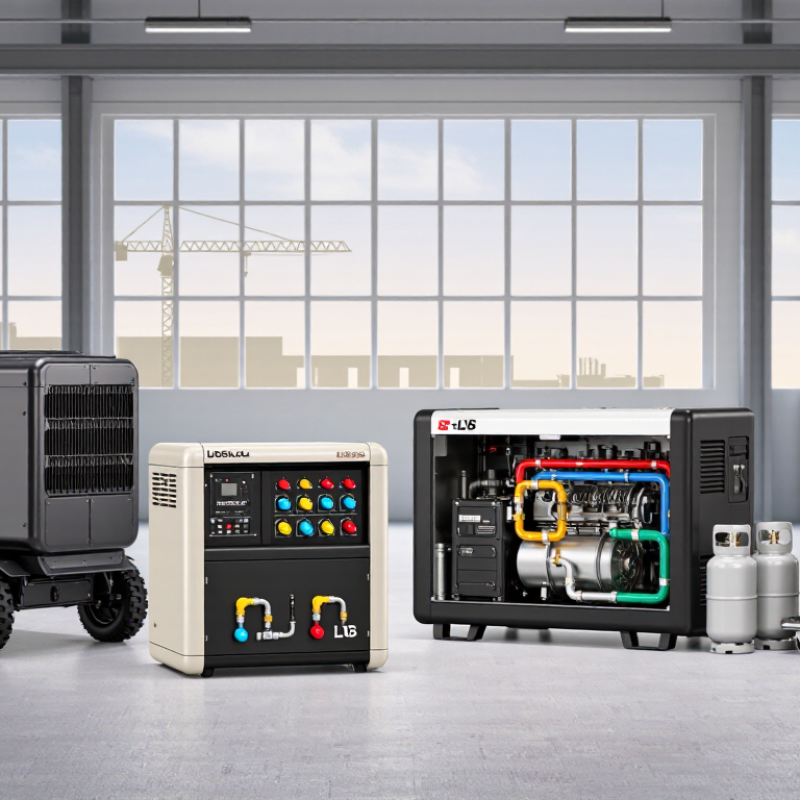
Multi-fuel generator types are mainly defined by the fuels they can burn, not by their frame size.
The most familiar combination is gasoline and propane. Gasoline offers quick starting and strong output. Propane stores cleanly, resists fuel degradation, and suits occasional backup use. Fuel switching is usually manual, so the generator must be stopped first. That detail matters. Some modern units add natural gas, creating a tri-fuel design. These models can use gasoline, propane, or piped natural gas, depending on availability. Natural gas is convenient at a fixed property, but service interruptions remain possible. Portable cylinders may provide better resilience during storms.
Larger standby and industrial sets often combine diesel with natural gas. Diesel supplies dependable ignition, while gas can reduce liquid-fuel consumption during suitable loads. They need precise controls, stable gas pressure, and trained maintenance. They are less practical for casual home use. Some commercial systems also support diesel with biodiesel or renewable diesel blends. Compatibility depends on engine approvals, storage conditions, and local fuel quality. A blend is not automatically a separate fuel mode.
The best type depends on runtime, climate, storage, and starting demand. Propane may start less readily in cold weather. Gasoline can age in storage. Natural gas needs a reliable supply line. Diesel handles sustained heavy loads well, but tanks require careful maintenance. No option is perfect. Field checks should include transfer behavior, fuel pressure, exhaust clearance, and load testing. A generator may run perfectly on one fuel and struggle on another. That weakness is easy to overlook. Read the fuel instructions, test both modes under load, and record the results.
How Do Inverter, Conventional, and Dual-Fuel Models Differ?
Multi-fuel generators commonly use gasoline, propane, or natural gas. Their value depends on how each design manages changing loads. Inverter, conventional, and dual-fuel models can all provide backup power, but they behave differently outdoors, at home, or on a worksite.
Inverter generators produce cleaner electricity through electronic conversion. This makes them suitable for laptops, medical electronics, and sensitive control boards. They usually adjust engine speed to match demand, reducing fuel use and noise. A quiet evening may sound like a soft fan. However, their compact systems can cost more and require careful maintenance. Output capacity may also be limited for heavy tools.
Conventional generators use a rotating alternator and maintain a steadier engine speed. They often deliver strong starting power for pumps, heaters, and construction equipment. Their design is easier to inspect and repair. The trade-off is noticeable noise, higher fuel consumption, and less refined power quality. Dual-fuel models add flexibility rather than a completely different electrical system. Switching between gasoline and propane can help when one fuel is unavailable. Propane stores well, but it may provide less starting power in cold weather. Gasoline often delivers stronger peak performance, yet it degrades during long storage. My first assumption was that dual-fuel always means better value. That judgment can be wrong. Fuel availability, load size, ventilation, maintenance skill, and local operating rules should shape the choice. Small details matter.
What Are the Top Multi-Fuel Generator Types?
How Do Inverter, Conventional, and Dual-Fuel Models Differ?
Inverter generators typically produce cleaner electricity, with total harmonic distortion (THD) commonly below 3%, making them suitable for sensitive electronics. Conventional generators often have higher THD, commonly ranging from 5% to 15%. Dual-fuel describes the ability to use two fuel types, usually gasoline and propane; it does not determine electrical quality, so the range shown represents a typical dual-fuel generator using a conventional alternator. Actual specifications vary by model and operating load.
Which Multi-Fuel Generator Type Fits Each Power Requirement?
What Are the Top Multi Fuel Generator Types?
Which Multi-Fuel Generator Type Fits Each Power Requirement?
Portable dual-fuel generators suit homes, small workshops, and temporary outdoor work. They usually switch between gasoline and propane. Gasoline offers easier starting and higher short-term output. Propane stores longer and burns cleaner. A practical choice is a 3–8 kW unit for refrigerators, lights, pumps, and selected heating controls. Do not size it by running watts alone. Motors may demand two or three times their rated power during startup.
Tri-fuel generators add natural gas to gasoline and propane. They fit homes with fixed gas connections and emergency backup needs. Natural gas can support longer operation, but outages may reduce gas pressure. Industrial multi-fuel sets serve construction sites, farms, and critical facilities. They often use diesel, natural gas, or renewable fuel blends. According to the IEA’s Electricity 2024 report, data centres used about 460 TWh globally in 2022 and may exceed 1,000 TWh by 2026. That growth increases interest in larger, carefully engineered backup systems. Still, one fuel strategy cannot suit every site.
Tips: List starting and running watts separately. Add at least 20% spare capacity. Test each fuel under load, not only at idle. The U.S. Department of Energy recommends following manufacturer sizing and ventilation guidance. Field experience shows that cold weather, long extension cables, and poor fuel storage can reduce real output. A tidy calculation can still fail in winter. Recheck it yearly.
What Safety and Maintenance Factors Apply to Every Type?
Across gasoline, diesel, propane, and natural-gas generators, carbon monoxide remains the quietest danger. Operate every unit outdoors, far from doors, windows, vents, and covered porches. Keep exhaust directed away from people and neighboring buildings. Never connect a portable generator directly to household wiring. A correctly rated transfer switch requires qualified electrical installation. That detail is often underestimated. Use dry, stable ground, and protect the unit from rain without blocking airflow. Maintain clear space around hot exhaust components and cooling inlets.
Before starting, inspect fuel lines, caps, cords, plugs, oil level, and visible damage. Refuel only after shutdown and cooling. Spilled fuel near a hot muffler can ignite quickly. Use the fuel approved in the manual; mixed or stale fuel can damage the system. For gas-connected models, check hoses and fittings for wear, then follow local gas-safety requirements. Never test leaks with a flame. A detector helps, but it cannot replace ventilation. Keep children away.
Maintenance differs by engine design, but the core routine is similar. Change oil and filters at the stated intervals, even when runtime seems low. Inspect spark plugs, belts, battery terminals, air filters, and exhaust screens. Run the generator periodically under an appropriate load, not only during inspections. Record dates, operating hours, unusual noises, and starting problems. Small notes reveal patterns. Store fuel according to container guidance, away from heat and ignition sources. I would not trust a perfect checklist. A missed cracked cable can matter more than a clean service log.