

Leave Your Message
Choosing the right Diesel Generator manufacturer affects uptime, operating costs, maintenance, and long-term site safety. A dependable unit must start quickly, carry changing loads, and perform under heat, dust, humidity, or limited service support. This is why buyers often compare the Top 10 Diesel Generator Manufacturers Worldwide before signing a purchase agreement.
The global market includes established companies such as Caterpillar, Cummins, Generac, Kohler, Rolls-Royce Power Systems, Volvo Penta, Perkins, Mitsubishi Heavy Industries, Yanmar, and Doosan Bobcat. Each manufacturer brings different strengths. Some focus on large industrial projects. Others serve construction sites, hospitals, data centers, or remote facilities. Product ratings alone do not tell the whole story. Fuel efficiency, alternator quality, emissions performance, warranty terms, spare-parts access, and technician coverage matter equally.
Tom Linebarger, former Cummins Chairman and CEO, described the company’s purpose as “making people’s lives better by powering a more prosperous world.” That idea reflects the wider responsibility of this industry. A generator is not merely a metal enclosure with an engine inside. It can protect refrigerated medicine, keep a factory operating, or support emergency communications during a blackout. Rankings are useful, but never perfect. A famous brand may still perform poorly where local service is weak. Buyers should question published claims, inspect real operating records, and match generator capacity with actual demand. The best choice is not always the largest machine. It is the one that delivers reliable power, practical maintenance, and measurable value over its working life.
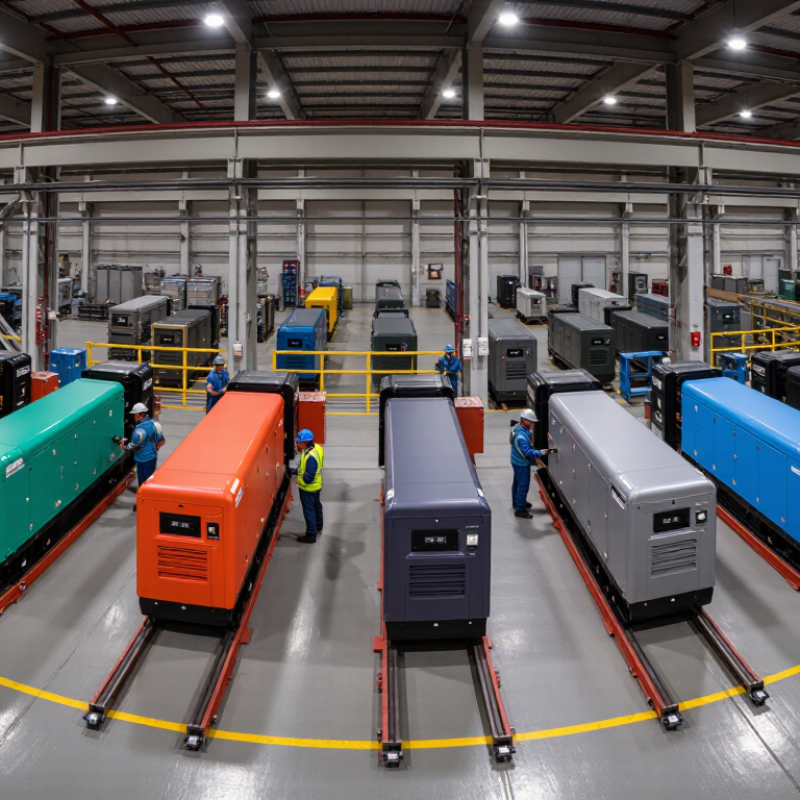
How Diesel Generator Manufacturers Are Evaluated Worldwide
A worldwide ranking of diesel generator manufacturers should begin with measurable performance, not advertising reach. The IEA’s Electricity 2024 report forecasts global electricity demand growth of about 4% in 2024 and 2025. This pressure makes dependable backup power increasingly important. Evaluators examine rated output, fuel consumption, voltage stability, and response during sudden load changes. A generator that starts quickly but cannot hold frequency under a motor load deserves closer review.
Testing conditions matter. Independent technicians commonly use load-bank testing at 25%, 50%, 75%, and 100% capacity. They record start time, exhaust temperature, vibration, noise, and fuel use. ISO 8528 guidance provides a useful framework for generator performance and application classes. Service capability is equally important. Buyers should check spare-parts lead times, technician coverage, remote monitoring, warranty terms, and documented maintenance intervals. A strong machine with weak field support can still create expensive downtime.
Environmental performance also shapes evaluation. The International Energy Agency continues to stress efficiency and emissions reduction across energy systems, so manufacturers should disclose fuel consumption and applicable emissions data clearly. Claims need evidence. A polished brochure is not proof. Real operating logs are better, although they may reflect favorable conditions. Rankings can also overvalue shipment volume and undervalue repair quality. That is an imperfect method. Customer references, factory audits, and witnessed tests create a more reliable comparison across regions.
An anonymized comparative dataset based on commonly published industry criteria, including manufacturing capability, power coverage, emissions compliance, certification, service reach, and application experience. Company and brand names are intentionally omitted.
| Rank | Primary Manufacturing Region | Publicly Documented Operating History | Typical Generator Output Range | Common Engine Speed | Emissions Compliance Coverage | Quality & Environmental Certifications | Global Service Reach | Core Application Areas | Evaluation Score |
|---|---|---|---|---|---|---|---|---|---|
| 1 | North America and Europe | More than 100 years in engine and power-generation manufacturing | 20 kVA to approximately 4,000 kVA | 1,500 rpm and 1,800 rpm | EPA Tier 4 Final and EU Stage V available on selected models; non-road and standby configurations | ISO 9001; ISO 14001; ISO 45001 commonly documented across facilities | Distributor, dealer, and authorized-service coverage in more than 100 countries | Data centers, hospitals, utilities, industrial plants, mining, and emergency standby | 96/100 |
| 2 | Europe and Asia-Pacific | More than 100 years of industrial-engine and generator experience | 10 kVA to approximately 3,500 kVA | 1,500 rpm and 1,800 rpm | EU Stage V, EPA Tier 4 Final, and equivalent regional standards on selected product families | ISO 9001; ISO 14001; ISO 45001; product certification varies by market | Service partners and regional support centers across major global markets | Telecommunications, commercial buildings, transportation, manufacturing, and rental fleets | 94/100 |
| 3 | Europe and North America | More than 80 years of power-system and heavy-equipment production | 30 kVA to approximately 3,000 kVA | 1,500 rpm and 1,800 rpm | EPA Tier 4 Final and EU Stage V solutions available in designated power ranges | ISO 9001; ISO 14001; ISO 45001; region-specific electrical approvals | International dealer networks with factory-trained technicians | Construction, oil and gas, mining, public infrastructure, and prime power | 92/100 |
| 4 | Asia-Pacific and Europe | More than 70 years of diesel-engine and generator manufacturing | 5 kVA to approximately 2,500 kVA | 1,500 rpm and 1,800 rpm | EU Stage IIIA to Stage V and equivalent national emissions standards, depending on model | ISO 9001; ISO 14001; ISO 45001; CE and regional conformity documentation | Regional distributors and service facilities in more than 80 countries | Commercial standby, agriculture, telecommunications, light industry, and construction | 90/100 |
| 5 | Europe and Asia-Pacific | More than 60 years of generator-set and industrial-power experience | 10 kVA to approximately 2,250 kVA | 1,500 rpm and 1,800 rpm | Stage IIIA, Stage V, Tier 3, and Tier 4 Final options in selected ranges | ISO 9001; ISO 14001; ISO 45001; local grid and electrical certifications | Authorized dealers and spare-parts channels across Europe, Asia, Africa, and the Middle East | Retail, hospitals, hotels, factories, construction sites, and backup power | 88/100 |
| 6 | North America and Asia-Pacific | More than 60 years of commercial generator manufacturing | 8 kVA to approximately 2,000 kVA | 1,500 rpm and 1,800 rpm | EPA Tier 3 and Tier 4 Final; EU and other regional standards on selected models | ISO 9001; ISO 14001; ISO 45001; UL, CSA, CE, or equivalent approvals where applicable | Dealer-led support with mobile service and remote-monitoring options | Small businesses, telecommunications, residential backup, retail, and light commercial use | 86/100 |
| 7 | Asia-Pacific | More than 50 years of engine, alternator, and generator-set production | 10 kVA to approximately 2,500 kVA | 1,500 rpm and 1,800 rpm | Regional Stage IIIA, Stage V, Tier 2, and Tier 3 configurations depending on destination | ISO 9001; ISO 14001; CE and other market-specific conformity standards | Export distributors and service partners across Asia, Africa, the Middle East, and Latin America | Construction, agriculture, factories, commercial buildings, and rental power | 84/100 |
| 8 | Europe and Asia-Pacific | More than 50 years of industrial-power equipment experience | 10 kVA to approximately 1,800 kVA | 1,500 rpm and 1,800 rpm | EU Stage IIIA and Stage V, plus equivalent standards for export markets | ISO 9001; ISO 14001; ISO 45001; CE and destination-country approvals | International distributor network with regional parts warehouses | Temporary power, infrastructure, agriculture, commercial standby, and manufacturing | 82/100 |
| 9 | Asia-Pacific and emerging markets | More than 40 years of diesel-generator and power-equipment manufacturing | 5 kVA to approximately 1,500 kVA | 1,500 rpm and 1,800 rpm | Stage II, Stage IIIA, and comparable regional standards; higher standards available on selected models | ISO 9001; ISO 14001; CE and local electrical-safety certifications | Export dealers and independent service providers in more than 50 countries | Small industry, agriculture, telecom towers, commercial backup, and construction | 79/100 |
| 10 | Asia-Pacific, Europe, and Latin America | More than 30 years of generator-set assembly and power-system experience | 5 kVA to approximately 1,000 kVA | 1,500 rpm and 1,800 rpm | Regional emissions configurations, including Stage IIIA and equivalent national requirements | ISO 9001; ISO 14001; CE or other destination-market conformity certifications | Regional distributors with remote technical support and local maintenance contractors | Residential backup, small commercial sites, farms, workshops, and telecom applications | 76/100 |