Top Power Generators for Home and Business Use
Choosing a Power Generator for a home or business starts with a simple question: what must stay running when the grid goes quiet? A refrigerator, sump pump, router, and a few lights create one kind of demand. A workshop, server room, or commercial kitchen creates another. Add up starting and running wattage, then consider runtime, fuel availability, noise, and where the unit will operate. Small details matter. A generator that can power a freezer may not start a large air conditioner.
Electrical educator Mike Holt’s safety-first guidance can be paraphrased this way: “Size the system for the load, then plan its safe connection.” That is a useful principle, not a substitute for site-specific advice. Standby, portable, and inverter generators each suit different needs, and advertised output alone does not settle the choice. A transfer switch and professional installation can help prevent dangerous backfeeding. Follow the manufacturer’s instructions, and operate fuel-burning units outdoors, away from doors and windows.
No single model fits every property. That sounds obvious, yet it is easy to buy for a rare worst-case scenario or overlook essential loads. A written load list helps expose those gaps. So does an honest look at maintenance: fuel storage, test runs, oil changes, and service access take effort. Not glamorous. This guide compares leading options for home and business use, with attention to capacity, reliability, operating costs, and practical trade-offs. Even careful planning can miss something. Revisit the list before you buy.
Power Generators: Core Components and Operating Principles
Top Power Generators for Home and Business Use
Power Generators: Core Components and Operating Principles
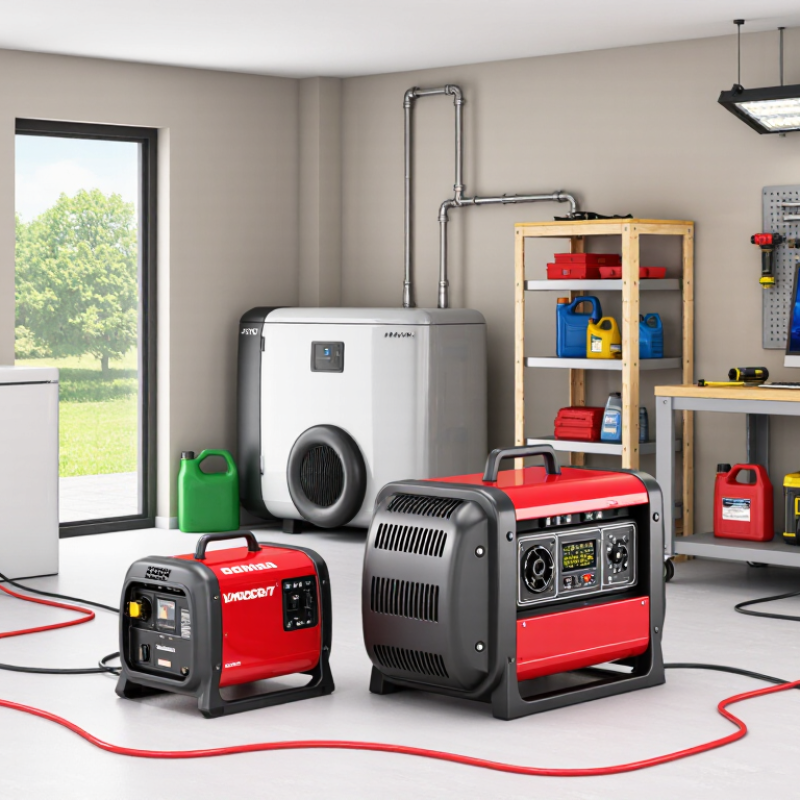
A generator converts mechanical energy into electrical power. Its engine burns fuel and spins a shaft connected to an alternator. Inside the alternator, rotating magnetic fields induce electrical current in stationary windings. The control panel displays output and provides outlets, while circuit breakers interrupt excessive current. Many units also use a voltage regulator to reduce fluctuations. Cooling fins, a fan, and an exhaust system manage heat and combustion gases. Each component has a job. A weak battery or clogged air filter can still prevent startup, even when the main parts seem sound. Real loads are less predictable than a simple rating suggests.
Tips: Check both running and starting wattage before connecting appliances. A refrigerator, for example, may briefly draw extra power when its compressor starts. Keep the generator outdoors, on a stable, dry surface, and follow its operating manual. Never operate it in an enclosed space.
For home or business use, match capacity to essential equipment rather than guessing from total nameplate wattage. Sensitive electronics may benefit from stable output, but suitability depends on the generator’s design and the equipment connected. Inspect oil and filters at the intervals specified by the manufacturer. Small maintenance tasks are easy to postpone. That can become an expensive mistake.
Top Power Generators for Home and Business Use — Core Components and Operating Principles
An engine turns the generator’s rotor, creating a rotating magnetic field that induces AC voltage in the stator. For a synchronous generator, speed is determined by frequency and pole count: ns = 120 × frequency ÷ poles. Actual generator designs may vary.
Generator Types and Fuel Sources for Home and Business
Generator choice depends on the loads you need to run and how often outages occur. Portable generators can power selected appliances or tools, but they require setup during each outage. Inverter models often run more quietly and suit sensitive electronics. Their available output may be limited, so check appliance starting watts, not only running watts. Standby generators connect to a building’s electrical system and can start automatically, but installation and maintenance require professional planning.
Fuel changes runtime, storage needs, and convenience. Gasoline is widely available, though it may be harder to store safely for long periods. Propane stores well and burns cleanly, but tank size affects how long a generator can run. Natural gas can provide a steady supply where a suitable connection exists, while diesel is common for larger business loads. No option is perfect. A simple fuel-cost estimate can also miss delivery delays or changing demand.
Tips: List essential devices and their wattage before shopping. Keep generators outdoors, far from doors and windows, and follow the manual’s clearance instructions. Test the setup before storm season. Rules of thumb help, but real loads can surprise you.
Assessing Power Needs, Capacity, and Runtime
Choosing a generator starts with the equipment you need to keep running, not the largest number on a product label. Write down each appliance’s running watts, then check whether motors require extra starting power. A refrigerator, sump pump, and furnace fan may draw more during startup than they do once running. Add the essential loads you might use at the same time. Leave some capacity for brief surges.
Be realistic. It is easy to count every appliance, even when you would never run them together. My first estimate would likely be too high unless I checked actual nameplate ratings. A qualified electrician can help assess fixed loads and connection requirements, especially for a home system. For a small business, include equipment that protects inventory or supports safe operations, such as refrigeration, lighting, and network hardware.
Runtime depends on more than the generator’s advertised fuel capacity. It changes with electrical load, fuel type, and operating conditions. A unit running near its limit may consume fuel faster than one powering only essential circuits. Estimate the hours you need between refills, then compare that figure with runtime data at a similar load. Test the setup before an outage. Keep a written load plan nearby; it may need revision.
Top Power Generators for Home and Business Use - Assessing Power Needs, Capacity, and Runtime
| Generator Type |
Typical Rated Output |
Typical Starting Output |
Suitable Power Needs |
Typical Runtime |
Fuel and Key Considerations |
| Portable inverter generator |
2–4 kW |
About 2.5–5 kW |
Essential household circuits, camping equipment, small tools, or a few appliances at a time. |
About 6–12 hours per tank at light to moderate load; varies by tank size and model. |
Usually gasoline. Often quieter and produces stable electricity suited to many sensitive electronics. Check the rated output before connecting multiple loads. |
| Conventional portable generator |
5–8 kW |
About 6–10 kW |
Selected home essentials such as refrigeration, lighting, a sump pump, and some small appliances. |
Often about 6–12 hours per tank at roughly half load, depending on fuel capacity and operating conditions. |
Usually gasoline. Higher starting output can help with motor-driven equipment, but starting loads must still be added to the capacity calculation. |
| Dual-fuel portable generator |
About 7–12 kW on gasoline; typically less on propane |
Model-dependent; check the rating for each fuel |
Several essential circuits or moderate backup needs for a home, workshop, or small business. |
Gasoline runtime is commonly several hours per tank; propane runtime depends on tank size and load. |
Can operate on gasoline or propane. Output and runtime differ by fuel, and propane tank capacity affects how long it can run. |
| Home standby generator |
About 10–26 kW |
Designed to handle specified starting loads within its rated capacity |
Automatic backup for selected circuits or, when properly sized, much of an entire home. |
Can operate for extended outages while an adequate fuel supply is available; there is no universal tank-based runtime. |
Commonly connected to natural gas or a stored propane supply. Requires professional installation, a transfer switch, and regular maintenance. |
| Commercial diesel generator |
About 20–100+ kW |
Depends on alternator and load requirements |
Shops, offices, farms, construction sites, and other businesses with larger or continuous power demands. |
Determined by load, fuel consumption, and tank size; consult the specific fuel-consumption chart for an estimate. |
Diesel models are available in a wide range of capacities. Installation, ventilation, noise control, emissions rules, and maintenance are important considerations. |
Planning note: Ratings and runtime are typical examples, not guarantees. Add the running watts of the equipment you plan to operate, account for the highest motor-starting surge, and choose a generator with adequate rated capacity. Runtime changes with load, fuel, temperature, maintenance, and model.
Comparing Top Generator Options for Different Applications
Choosing a generator starts with the job it must do, not its advertised maximum output. For home backup, list essential loads such as a refrigerator, a few lights, and a heating system. Check each appliance’s running and starting wattage; motors can briefly demand much more power. A portable inverter generator often suits modest needs and produces less noise, which matters near bedrooms or neighbors. Quiet matters. Its limited capacity may not run several large appliances at once.
A standby generator can support more household circuits and start automatically during an outage. It usually costs more and needs professional installation, planned fuel supply, and regular testing. For a small business, downtime may matter more than household comfort. A larger portable unit can power selected tools, refrigeration, or a payment terminal, but only if the combined load stays within its rated capacity. A bakery’s refrigeration needs differ sharply from a workshop’s equipment. There is no single best fit.
Compare fuel availability, runtime, service access, and noise alongside output. If fuel deliveries become difficult during storms, that detail can outweigh a higher wattage rating. Keep portable units outdoors, well away from doors and windows, to reduce carbon monoxide risk. Use a properly rated transfer setup installed by a qualified electrician; improvised connections can endanger people and damage equipment. One planning detail is easy to miss: test the generator under realistic loads before relying on it. A calm test day may reveal an inconvenient limitation.
Installation, Safety, and Routine Maintenance
A safe generator installation starts with an honest load assessment: list essential circuits, starting loads, and expected run time. A qualified electrician can size the unit and install a transfer switch, helping prevent dangerous backfeed into utility lines. Place portable units outdoors on stable, dry ground, with exhaust directed away from doors and windows. Small details matter. The U.S. Consumer Product Safety Commission reported an average of about 85 annual carbon monoxide deaths linked to portable generators during 2017–2019. Its guidance calls for placing generators at least 20 feet from the home. Never run one in a garage, even with the door open.
For permanent systems, have a qualified installer check clearances, wiring, ventilation, and the fuel connection before startup. Keep the unit protected from weather without enclosing it or blocking airflow. Install carbon monoxide alarms near sleeping areas and test them regularly. Keep it dry. It is easy to assume an open shed is safe; it may still trap exhaust.
Maintenance should follow the owner’s manual, not a guessed calendar. Check oil, filters, battery terminals, fuel condition, and visible leaks at the specified intervals. Run scheduled tests and record dates, readings, and faults in a simple log. NFPA 110 sets inspection, testing, and maintenance requirements for emergency and standby power systems; commercial operators should check the edition adopted for their site. A neat log helps, but it cannot replace a technician’s inspection when performance changes.