

China’s electric power equipment sector has become a critical supplier for utilities, industries, data centers, and emergency infrastructure worldwide. The International Energy Agency reported that global electricity demand is entering a stronger growth phase, with China remaining one of the largest sources of additional consumption. China’s scale creates manufacturing advantages. It also makes supplier selection more complicated.
According to the China Electricity Council’s 2024 industry statistics, China’s installed power generation capacity exceeded 3.3 billion kilowatts. Non-fossil capacity represented more than half of the national total. This shift is changing the meaning of Electric Power Generator manufacturing. Buyers now assess diesel and gas units alongside hydro, wind, solar, storage, and hybrid systems. Efficiency matters. So do emissions, grid compatibility, noise control, and long-term maintenance.
This guide examines China’s top Electric Power Generator manufacturers through practical and technical criteria. These include production capability, testing standards, export experience, engine partnerships, after-sales coverage, and documented project performance. Public rankings can be imperfect. Some companies disclose detailed data, while others provide limited information. That difference deserves attention. A strong brand name does not automatically guarantee reliable field performance. Buyers should review ISO certifications, rated output, fuel consumption, protection systems, spare-parts availability, and local service response. Reports from the IEA, the China Electricity Council, and manufacturer documentation provide useful reference points. However, independent verification remains essential before procurement. The best manufacturer depends on operating conditions, not reputation alone.
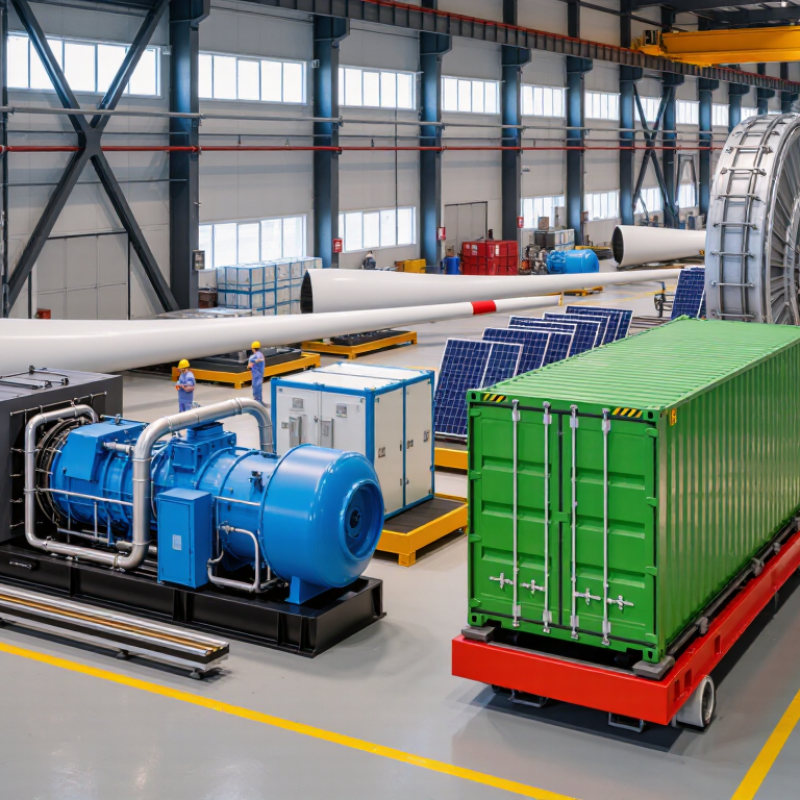
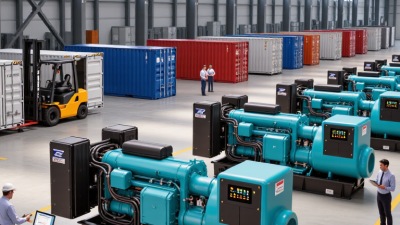
China’s electric power generator manufacturing industry combines large-scale production with increasingly detailed engineering. Factories commonly build diesel, gas, and hybrid generator sets for construction sites, hospitals, data centers, and remote facilities. Their supply networks often include local producers of alternators, control panels, radiators, fuel tanks, and sound-attenuating enclosures.
A reliable manufacturing process begins with clear power requirements. Engineers calculate prime power, standby capacity, voltage, frequency, starting current, and expected operating hours. Inside the workshop, technicians inspect stator windings, engine alignment, cable terminals, and cooling systems. Each completed unit may undergo insulation checks, simulated load testing, voltage stability tests, and noise measurements. Factory acceptance testing is useful. It is not enough alone.
Buyers should review quality certificates, production records, component traceability, and after-sales procedures. Compliance with applicable Chinese and international standards should be verified for the destination market. A serious supplier can explain maintenance intervals, spare-part availability, fuel consumption, and controller protection functions without vague promises. Factory audits also reveal practical details, such as housekeeping, calibration labels, welding quality, and test-bench capacity.
Not every factory gets this right. A polished showroom proves little. Some specifications may change after production begins, especially when buyers accept unclear substitutions. I would request signed technical drawings, inspection points, and recorded test results before shipment. Even then, performance depends on installation, ventilation, fuel quality, and operator training. That part is often underestimated.
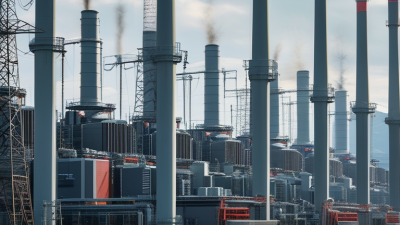
China Top Electric Power Generator Manufacturers?
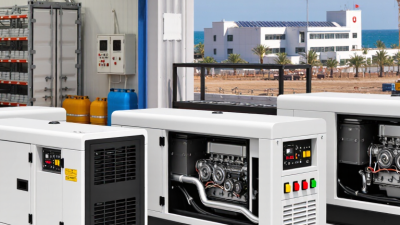
Chinese manufacturers produce several generator types for construction, hospitals, factories, data centers, and remote sites. Diesel generators remain common because they offer strong torque and dependable operation under heavy loads. Gas generators support cleaner indoor or urban applications when natural gas infrastructure is available. Dual-fuel models can switch between diesel and gas, though their control systems require careful commissioning.
Portable gasoline generators serve small tools, temporary lighting, and household backup needs. Industrial diesel sets usually range from compact standby units to multi-megawatt power systems. Manufacturers also build trailer-mounted, sound-attenuated, marine, and high-altitude configurations. A practical buyer should check prime power ratings, standby ratings, voltage, frequency, and cooling design. These details matter more than a large headline number.
Automatic transfer switches and synchronizing systems help multiple units share loads safely. For hospitals and data facilities, response time, harmonic control, and fuel autonomy deserve close inspection. Factory testing may include insulation checks, load-bank testing, vibration measurement, and exhaust monitoring. Still, paperwork can look better than field performance. That is an uncomfortable but useful lesson. Ask for test records, service procedures, spare-parts availability, and local technician support. Consider dust, humidity, cold starts, and uneven fuel quality before choosing a configuration. A generator that performs well in a clean workshop may struggle beside a hot, dusty jobsite.
| Generator Type | Typical Output Range | Primary Energy Source | Main Configuration | Typical Applications | Common Technical Standards |
|---|---|---|---|---|---|
| Diesel Generator Sets | Approximately 8–3,000 kVA per set | Diesel fuel | Compression-ignition engine coupled with a synchronous alternator; open, silent, trailer-mounted, or containerized versions | Emergency power, construction sites, factories, hospitals, telecommunications, data centers, and standby power systems | ISO 8528; GB/T 2820; IEC 60034-1; emissions and noise requirements vary by destination market |
| Natural Gas Generator Sets | Approximately 20 kW–3,000 kW per unit | Natural gas, biogas, or other treated gaseous fuels | Spark-ignition gas engine with synchronous alternator; available in prime-power and combined-heat-and-power configurations | Distributed generation, industrial facilities, commercial buildings, district heating, wastewater plants, and microgrids | ISO 8528; ISO 3046; IEC 60034-1; local gas-safety and emissions regulations |
| Gasoline Portable Generators | Approximately 0.8–20 kVA per unit | Gasoline | Air-cooled engine with compact alternator; recoil-start or electric-start designs are common | Household backup, outdoor work, small retail operations, recreational use, and emergency field power | ISO 8528; IEC 60034-1; applicable electrical, fuel-system, noise, and portable-equipment safety requirements |
| Marine Generator Sets | Approximately 5–2,000 kW per unit | Marine diesel fuel | Marine-rated diesel engine and alternator with corrosion protection, seawater cooling, and vibration-resistant mounting | Commercial vessels, fishing boats, offshore support vessels, ferries, workboats, and onboard auxiliary systems | ISO 8528; IEC 60092; applicable maritime authority and classification-society requirements |
| High-Voltage Generator Sets | Approximately 500–3,000 kVA per unit | Diesel or natural gas | Medium-voltage alternator, typically designed for 3.3 kV, 6.6 kV, or 11 kV systems, with dedicated switchgear | Large industrial plants, mines, airports, data centers, utility support, and critical infrastructure | ISO 8528; IEC 60034-1; IEC 62271 series; project-specific grid and protection requirements |
| Hydroelectric Generators | From approximately 100 kW to more than 100 MW per unit | Hydraulic energy from rivers, dams, or pumped-storage systems | Hydraulic turbine coupled with a synchronous generator; common turbine types include Francis, Kaplan, and Pelton | Small hydropower stations, utility-scale power plants, irrigation projects, and rural electrification | IEC 60034-1; IEC 60193 for hydraulic turbines; IEC 61362; applicable grid-connection codes |
| Wind Turbine Generators | Approximately 1.5–16 MW per utility-scale turbine | Wind energy | Permanent-magnet or doubly fed induction generator with power converter and pitch-control system | Onshore wind farms, offshore wind farms, hybrid renewable-energy projects, and utility-scale generation | IEC 61400 series; IEC 60034-1; applicable wind-farm grid-connection standards |
| Solar Hybrid Generator Systems | Approximately 1 kW–10 MW system capacity | Solar photovoltaic energy combined with diesel, gas, battery, or grid power | Photovoltaic modules, inverter, battery energy storage, and dispatchable generator controlled by an energy-management system | Remote sites, telecommunications, islands, farms, construction camps, commercial buildings, and microgrids | IEC 62477-1; IEC 62109; IEC 62933; ISO 8528 for the generator component; local grid codes |
| Cogeneration and CHP Units | Approximately 50 kW–10 MW per installation | Natural gas, biogas, diesel, or other fuels | Engine-driven generator with heat-recovery equipment for hot water, steam, or process heat | Manufacturing plants, hotels, hospitals, universities, food processing, and district-energy systems | ISO 8528; ISO 3046; IEC 60034-1; local thermal-efficiency, emissions, and electrical regulations |
| Inverter Generators | Approximately 1–8 kVA per portable unit | Gasoline or liquefied petroleum gas | Engine-driven alternator with rectifier, inverter, electronic voltage regulation, and low-noise enclosure | Sensitive electronics, camping, mobile medical equipment, residential backup, and small field applications | ISO 8528; IEC 60034-1; applicable electromagnetic-compatibility and portable-generator safety standards |
Chinese electric power generator manufacturers are moving beyond conventional diesel and thermal equipment. They now supply hydro, gas, wind, solar, and battery-linked generation systems. The International Energy Agency’s Renewables 2024 report projects that China will provide almost 60% of global renewable capacity additions through 2030. This scale strengthens local engineering, component sourcing, and export experience.
The China Electricity Council reported that China’s total installed power capacity exceeded 3.3 billion kilowatts by the end of 2024. Non-fossil capacity represented more than half of that total. Leading manufacturers increasingly combine generators with digital monitoring, automatic voltage regulation, and remote maintenance tools. Buyers should examine measured fuel consumption, load response, noise levels, and performance at high temperatures. Factory testing matters. So does evidence from operating sites.
Quality is uneven. Some product catalogs still present optimistic efficiency figures without enough test conditions. That deserves scrutiny. Independent inspection, ISO 9001 systems, and compliance with applicable IEC or national standards can reduce procurement risk. Experience shows that after-sales support often matters more than a small price difference. Spare-part availability, technician response time, and documented warranty procedures should be checked before signing. Chinese manufacturers offer impressive production depth, but technical claims still need practical verification.
China’s leading electric power generator manufacturers are judged by more than output capacity. Their engineering must follow measurable technical standards. The IEA Renewables 2024 report recorded 473 GW of new renewable capacity worldwide in 2023. This growth increases demand for generators that can respond quickly to variable grid conditions.
Core technologies include high-efficiency alternators, digital excitation systems, automatic voltage regulation, and low-emission engine control. IEC 60034 defines important requirements for rotating electrical machines, including temperature rise, insulation, and efficiency testing. ISO 8528 covers engine-driven AC generating sets. In a factory test, engineers may check voltage stability, frequency response, vibration, and load acceptance. A 50 Hz generator cannot be assessed by rated power alone.
Grid-connected equipment also needs protection and communication functions. IEEE 1547 provides widely used guidance for distributed energy resources, including voltage support and islanding protection. ISO 9001 supports controlled production and traceable quality procedures. The IEA Electricity 2024 report highlights rising system flexibility needs as electricity demand expands and renewable penetration grows. That makes synchronization controls increasingly important.
Standards are not perfect. A certified generator can still fail under poor cooling, unstable fuel quality, or weak maintenance. Field records matter. Manufacturers should publish test conditions, harmonic distortion data, noise levels, and service intervals. Buyers should compare verified performance, not attractive catalogue figures. The industry still needs clearer lifetime carbon data and more consistent cybersecurity testing.
Choosing a Chinese electric power generator manufacturer requires more than comparing prices. Check its factory experience, engineering team, and production capacity. Ask for project references from industries similar to yours. A reliable supplier should explain engine options, alternator performance, fuel use, noise levels, and expected maintenance intervals clearly.
Request current certificates, test reports, and detailed technical drawings. Verify whether the documents match the actual generator configuration. During a factory visit, inspect welding quality, cable routing, control panels, and load-testing equipment. Ask to see a generator running under load, not only a polished showroom model. Independent inspection can confirm output, voltage stability, and safety features. I have found that small documentation gaps often create larger installation problems later.
Tips: Compare at least three suppliers. Ask about spare-part availability in your region. Confirm warranty response times in writing. Check whether technicians can support commissioning remotely or on site. Do not judge quality from appearance alone. Some excellent workshops look modest. Some impressive facilities still need closer verification. Evaluate communication too, because delayed answers may become delayed service. Require a sample inspection plan before production begins, including factory acceptance tests, packaging details, and shipment records. Leave room for questions; rushed decisions usually hide assumptions.