

Choosing a reliable Generator Set supplier in China requires more than comparing catalog prices. Global buyers must examine manufacturing experience, export records, certification practices, and after-sales support. A low quotation may look attractive, yet weak spare-parts access can stop a project when power is most needed.
This guide introduces ten leading Chinese generator set suppliers serving international markets. The selection considers production capacity, engine partnerships, quality-control systems, customization ability, and service coverage. Evidence such as factory testing, load-bank reports, documented warranties, and customer references deserves careful attention. Real projects reveal more than polished brochures. A containerized unit leaving a coastal factory may need to perform in a humid mining site, a dusty construction camp, or a hospital with strict power requirements.
Conditions differ widely.
Supplier strength is not identical across every application. One company may excel at large diesel power stations, while another offers better support for compact rental fleets or silent urban installations. Buyers should verify current certifications, local compliance requirements, voltage specifications, fuel consumption, noise levels, and delivery responsibilities before signing contracts. Product information can also change as engines, controllers, and emission standards evolve.
The companies discussed here are presented as practical options, not permanent winners. Rankings may shift with market conditions, technical scope, and regional service quality. A careful purchasing team should request recent test documents, inspect production arrangements where possible, and compare total ownership costs. Reliable power depends on details that are easy to overlook. The best supplier is the one that performs consistently after delivery, not merely the one that promises the most before it.
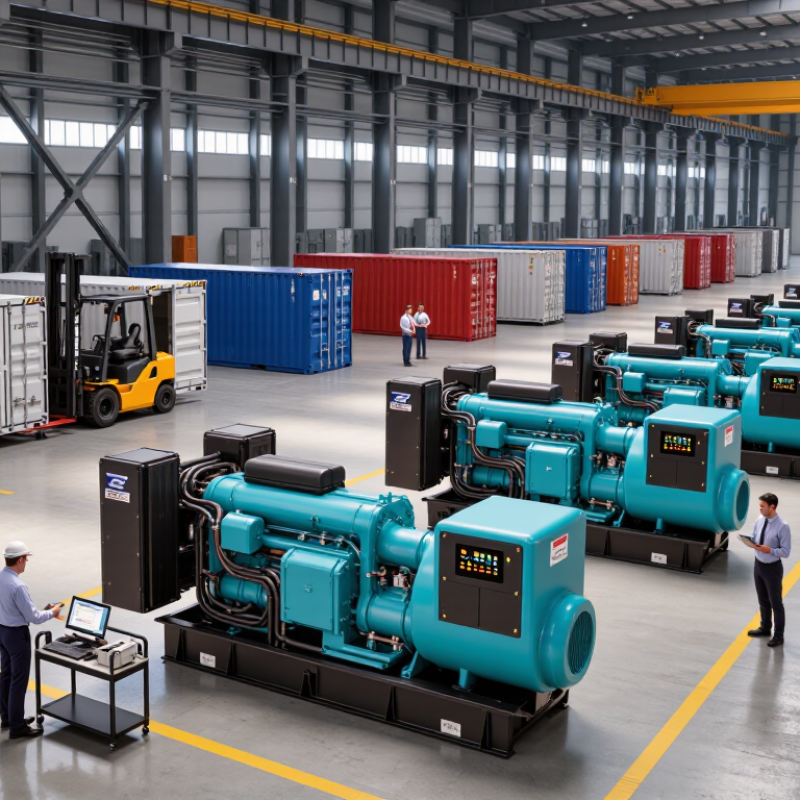
A generator set combines an engine, alternator, control panel, fuel system, and protective enclosure. It converts fuel energy into stable electrical power during outages or off-grid work. The engine produces mechanical movement, while the alternator creates electricity. The control system manages voltage, frequency, alarms, and shutdown protection. Correct sizing matters. A unit that is too small may overheat under motor starting loads. An oversized unit can waste fuel and operate poorly.
Supplier selection involves more than comparing prices. Experienced buyers examine rated and standby power, fuel consumption, noise levels, emissions compliance, and service access. They also check testing procedures, spare-parts availability, warranty terms, and technician training. A reliable supplier should explain load calculations clearly, not simply recommend the largest available model. Ask for documented factory tests and practical installation guidance.
Details reveal competence. Can the supplier provide a wiring diagram before shipment? Can it explain performance at high altitude, extreme heat, or low temperatures? Can local technicians respond quickly when a controller displays an alarm? These questions expose weak support. A polished brochure is not proof of dependable equipment. Field conditions are less tidy. Cable lengths change, ventilation gets restricted, and maintenance may be delayed. Buyers sometimes focus too heavily on the purchase price. That mistake can become expensive through fuel loss, downtime, and unavailable parts. A careful supplier discusses these risks openly, even when the discussion slows the sale.
A generator set combines an engine, alternator, control system and supporting equipment to produce electricity when grid power is unavailable or unreliable. For a global supplier shortlist, buyers should compare technical suitability, compliance, total cost and after-sales capability rather than focusing only on the purchase price.
The chart presents an illustrative procurement-weighting model for comparing suppliers across a top-10 shortlist. It is not a ranking of individual companies or a statement of market share. The criteria reflect common international generator-set purchasing considerations, including ISO 8528 performance classification, regulatory compliance, lifecycle cost and service support.
Selecting a Chinese generator set supplier requires more than comparing catalogue prices. The IEA’s Electricity 2024 report expects data-centre electricity demand to exceed 1,000 TWh annually by 2026. Reliable backup power is becoming a planning requirement.
Start with engineering evidence. Ask for ISO 8528 test results, rated output, transient response, fuel consumption, and load-bank records. Check whether the factory can test complete sets, not only engines or alternators.
Request photographs showing wiring, control panels, grounding, and enclosure construction. Small details reveal production discipline.
Certification must match the destination market. Verify applicable electrical, emissions, noise, and safety requirements before signing. A certificate alone proves little. Inspect its issuing body, scope, expiry date, and tested model. Factory audits should review calibration records, nonconformity reports, worker training, and quality traceability. The supplier should also explain spare-parts availability and emergency support in your region.
Delivery capability matters. Ask for recent export references, realistic lead times, packaging methods, and warranty response procedures.
The World Bank’s Enterprise Surveys show that unreliable electricity remains a major business constraint in many markets, making service speed commercially important. Do not accept vague claims such as “global support.” Require response times in writing.
The cheapest offer may hide expensive assumptions. Fuel data may use different load factors. Noise figures may use different measuring distances. Compare identical conditions.
This is where buyers often rush, including experienced teams. Independent inspection before shipment is not excessive; it can expose incomplete accessories, weak documentation, or performance gaps before installation.
China’s Top 10 Generator Set Suppliers for Global Buyers reflect China’s expanding role in global power equipment. The IEA Electricity 2024 report forecasts global electricity demand to grow by about 3.4% annually through 2026. This growth supports demand for standby, prime, and mobile generator sets.
A practical review should examine more than factory capacity. Buyers should check ISO 8528 performance ratings, 50 Hz or 60 Hz compatibility, fuel consumption at 75% load, and documented load-bank testing. MarketsandMarkets estimates that the global diesel generator market will continue expanding through 2029, driven by data centers, construction, healthcare, and unstable grid regions. These sectors need reliable starts, not attractive brochures.
Top suppliers usually offer integrated testing, remote monitoring, and export documentation. During a factory audit, inspect winding insulation, control-panel wiring, radiator quality, and spare-parts storage. Ask for noise measurements and emissions certificates for the destination market. Published market figures are not perfectly comparable. Some reports combine portable units with large industrial systems, which can distort supplier rankings. A lower purchase price may also hide longer lead times or weak local service. That risk deserves attention.
China Top 10 Generator Set Suppliers for Global Buyers
A credible supplier shortlist should begin with product range, not catalogue size. Leading Chinese manufacturers commonly offer diesel, gas, and hybrid generator sets from compact 10 kVA units to multi-megawatt systems. Containerized sets suit construction sites and mining camps. Open-frame models often fit factories and temporary installations. According to the International Energy Agency’s Electricity 2024 report, data-center electricity demand may exceed 1,000 TWh by 2026. Reliable standby power is becoming more important.
Certifications reveal manufacturing discipline. Buyers should check ISO 9001 for quality systems, ISO 14001 for environmental management, and ISO 45001 for occupational safety. CE, UKCA, UL, or local approvals may apply, depending on the destination market. Emissions documentation must match the engine model and operating region. A certificate copied into a brochure is not enough. Request the original scope, validity date, and testing authority.
International coverage also requires evidence. Strong suppliers provide export references, multilingual manuals, spare-parts plans, and remote commissioning support. Their products should accept common voltages, frequencies, fuel standards, and synchronizing controls. The World Bank reports that around 675 million people lacked electricity access in 2021, showing why dependable distributed power still matters. Yet rankings can be imperfect. Some suppliers report impressive installed capacity without proving after-sales response times. Buyers should inspect a running set, review factory test records, and ask who will answer at 2 a.m. Their answer matters.
| Rank | Supplier Reference | Typical Power Range | Main Product Range | Fuel and Configuration Options | Commonly Available Certifications and Standards | International Market Coverage | Buyer Verification Points | Export Readiness |
|---|---|---|---|---|---|---|---|---|
| 1 | Supplier 01 | 8–3,000 kVA | Open-frame, silent, trailer-mounted, containerized, and emergency standby generator sets | Diesel; 50 Hz and 60 Hz; single- and three-phase; manual or automatic transfer operation | ISO 9001; CE for applicable product configurations; ISO 8528 performance classification available by model | Asia-Pacific, Africa, the Middle East, Latin America, and selected European markets | Request model-specific test reports, alternator data, factory acceptance records, and spare-parts lists | High-volume export capable |
| 2 | Supplier 02 | 10–2,500 kVA | Commercial standby sets, prime-power sets, low-noise sets, and mobile power units | Diesel and gas options; radiator-cooled and remote-radiator systems; AMF and ATS integration | ISO 9001; CE where required; EMC and low-voltage compliance documentation for relevant markets | South Asia, Southeast Asia, Africa, Gulf countries, and construction markets worldwide | Confirm engine and alternator origin, acoustic test results, fuel-consumption curves, and local service coverage | Broad OEM support |
| 3 | Supplier 03 | 15–2,000 kVA | Industrial diesel sets, data-center standby systems, synchronizing systems, and parallel-control packages | Diesel; prime, standby, and continuous-duty ratings; synchronizing and load-sharing controls | ISO 9001; ISO 14001 commonly available; CE documentation for qualifying configurations; ISO 8528 testing | Europe, the Middle East, Africa, Southeast Asia, and selected North American projects | Check transient-response results, parallel-operation diagrams, controller compatibility, and commissioning scope | Strong project capability |
| 4 | Supplier 04 | 5–1,500 kVA | Compact commercial sets, residential backup systems, telecom power units, and rental-grade equipment | Diesel and gasoline models; air- or water-cooled designs; optional ATS and remote monitoring | ISO 9001; CE for applicable units; RoHS declarations may be available for electrical components | Asia, Africa, Latin America, island markets, and small-business power applications | Verify enclosure IP rating, battery charger specifications, cold-start performance, and replacement-part availability | Flexible small-batch supply |
| 5 | Supplier 05 | 20–3,000 kVA | Heavy-duty industrial sets, mining-power packages, containerized plants, and high-altitude configurations | Diesel; derated operation for altitude and ambient temperature; bulk-fuel and external cooling options | ISO 9001; ISO 14001; CE for applicable products; project-specific environmental and noise documentation | Mining and infrastructure projects in Africa, Central Asia, the Middle East, and Latin America | Request derating calculations, site-condition review, structural drawings, fuel-system specifications, and FAT procedures | Industrial project focused |
| 6 | Supplier 06 | 10–2,250 kVA | Silent canopy sets, rental units, mobile generators, and temporary power distribution packages | Diesel; trailer-mounted and skid-mounted formats; quick-connect outlets and remote start options | ISO 9001; CE for relevant models; road and trailer compliance depends on destination-country requirements | Europe, Africa, the Middle East, Southeast Asia, and international rental fleets | Confirm trailer homologation, lifting points, noise measurements, connector standards, and rental-duty warranty terms | Mobile-power capable |
| 7 | Supplier 07 | 7.5–1,000 kVA | Telecom backup systems, hybrid solar-diesel packages, compact standby units, and remote-site power systems | Diesel; battery integration; hybrid controllers; remote monitoring through cellular or Ethernet interfaces | ISO 9001; CE for applicable equipment; EMC and electrical-safety documentation subject to configuration | Telecom and off-grid applications across Africa, South Asia, Southeast Asia, and remote regions | Evaluate fuel-saving algorithms, battery compatibility, controller cybersecurity, communications protocols, and service response | Remote-site specialist |
| 8 | Supplier 08 | 15–2,000 kVA | Gas generator sets, combined heat and power packages, diesel backup units, and microgrid solutions | Natural gas, biogas, and diesel; CHP options; grid-parallel and island-mode controls | ISO 9001; ISO 14001; CE for applicable products; local gas and emissions approvals may be required | Europe, China, Southeast Asia, the Middle East, and commercial energy projects | Confirm gas-quality requirements, emissions data, heat-recovery output, grid-code compliance, and commissioning responsibilities | Energy-system oriented |
| 9 | Supplier 09 | 8–1,250 kVA | Standard diesel sets, agricultural backup systems, building standby units, and customized control panels | Diesel; 50 Hz and 60 Hz; standard and customized voltage configurations; ATS-ready systems | ISO 9001; CE for applicable models; ISO 8528 ratings and factory testing available by order | Asia-Pacific, Africa, Latin America, and price-sensitive commercial markets | Verify production lead time, minimum order quantity, voltage configuration, consumables list, and warranty exclusions | Cost-competitive supply |
| 10 | Supplier 10 | 20–2,500 kVA | Data-center backup packages, hospital power systems, synchronization panels, and containerized solutions | Diesel; N+1 redundancy; automatic mains failure; parallel operation; remote supervision and alarms | ISO 9001; ISO 14001; CE for applicable configurations; project-specific EMC, safety, and fire documentation | Middle East, Africa, Southeast Asia, Europe, and mission-critical infrastructure projects | Request redundancy design, step-load test results, harmonic data, maintenance schedules, and 24/7 support terms | Mission-critical capable |
A top-10 supplier list is only a starting point. Global buyers should compare equivalent specifications, not attractive headline prices. The IEA’s Electricity 2024 report estimates that data-centre electricity use may exceed 1,000 TWh by 2026. This raises demand for reliable standby and prime-power systems. Request fuel consumption at 50%, 75%, and 100% load. Check rated voltage, frequency, ambient temperature, noise level, and autonomy. A quote without these details is incomplete.
Tips: Build one comparison sheet. Include engine data, alternator efficiency, controller functions, enclosure rating, testing, warranty, spare parts, delivery terms, and payment milestones. Ask for ISO 8528 performance evidence and an ISO 9001 quality certificate. Confirm whether factory acceptance testing is included. Also calculate five-year ownership costs, including fuel, filters, transport, installation, and service visits.
The World Bank’s Logistics Performance Index 2023 shows that international delivery reliability differs sharply across markets. Therefore, compare lead times using the same shipping term, such as FOB or CIF. Ask for production photos, serial-number records, test reports, and references from similar climates. Verify local service capacity before signing.
A low quote can still be the wrong quote. Some buyers overvalue the purchase price and undervalue response time. That mistake is easy to make. A stronger evaluation gives each supplier weighted scores for technical fit, verified quality, logistics, warranty clarity, and total cost. Allow a small contingency for customs delays, specification changes, and commissioning problems.