

Choosing among China’s top 10 Silent Power Generator suppliers requires more than comparing catalog prices. Buyers should examine manufacturing experience, product consistency, technical support, and documented quality controls. A polished website is not enough. Factory records, inspection reports, and customer feedback matter more.
This introduction reviews leading Chinese suppliers through practical purchasing criteria. These include rated output, fuel efficiency, noise performance, enclosure design, engine brands, controller quality, and maintenance access. Sound claims should be checked under stated testing conditions, such as distance, load, and operating environment. A generator advertised at low noise may perform differently beside a warehouse wall.
Reliable suppliers usually provide clear datasheets, load-bank testing, warranty terms, spare-parts availability, and installation guidance. Certifications should also match the destination market. Buyers may request factory videos, serial-number records, sample inspection, and references from comparable projects. These steps reduce uncertainty before a large order is placed.
The term “top” remains relative. A supplier serving telecom towers may not suit a construction site or hospital backup system. Price can also hide costs, including fuel use, shipping protection, commissioning, and long-term servicing. A ranking can never be perfectly objective. It should be treated as a starting point, not a final decision.
The following overview presents ten notable Chinese suppliers and explains where each may fit. Their strengths, limitations, and verification points deserve equal attention. Real performance begins after delivery.
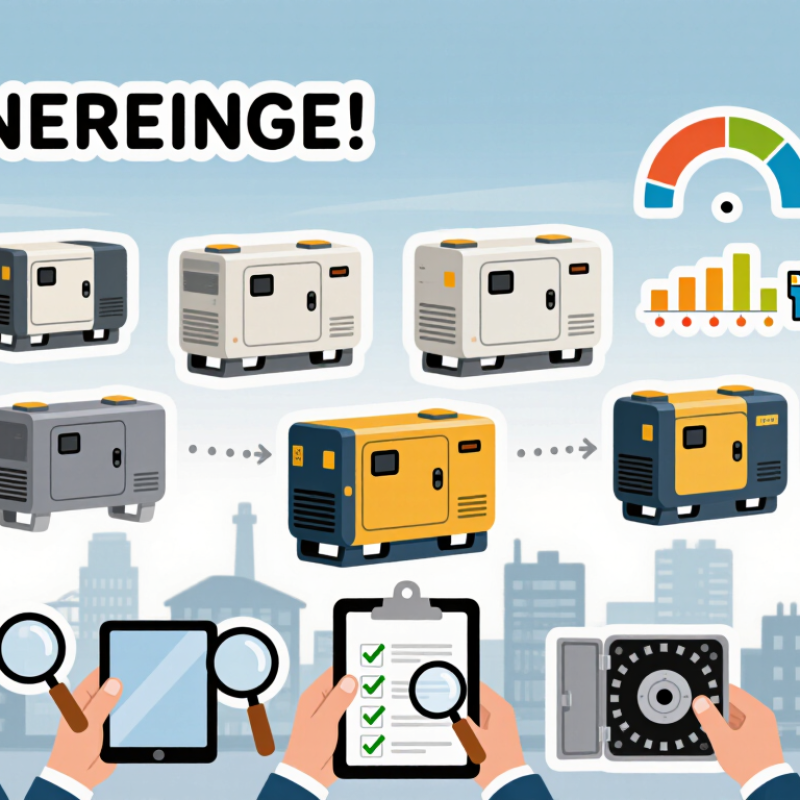
Silent power generators are diesel, gas, or hybrid units designed to reduce operating noise. In China, “silent” usually refers to an enclosed generator set with acoustic insulation, vibration control, and a quieter exhaust system. The term has no single universal performance level. Buyers should request measured noise data, test conditions, and distance specifications.
The scope includes portable units, trailer-mounted sets, and containerized systems for construction, events, factories, hospitals, and emergency facilities. A practical evaluation should cover rated power, fuel use, runtime, enclosure materials, cooling performance, and maintenance access. A generator may sound quiet outside, yet remain loud near the control panel. This detail is often missed. Noise matters.
Tips: Ask for sound-pressure readings in dB(A), not vague claims such as “super silent.” Confirm whether readings were taken at seven meters, one meter, or another distance. Check local grid and environmental requirements before installation. Review service records, load-bank testing, spare-parts availability, and warranty terms. Factory photographs can help, but they are not proof of field performance. An independent inspection is safer. Also, compare low-load operation, because some engines become less efficient and noisier when lightly loaded. In my experience, supplier rankings should reflect verified testing, engineering support, delivery consistency, and after-sales responsiveness, not advertising visibility alone. The top ten may change by application, region, and required power capacity.
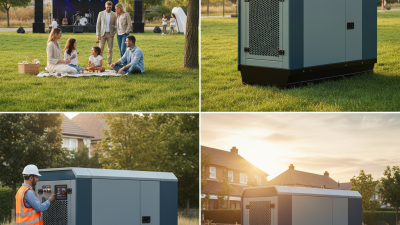
Ranking China’s top ten silent power generator suppliers requires more than comparing website claims. A practical review starts with verified manufacturing capacity, engineering staff, and documented quality controls. Factory audits should examine welding, enclosure sealing, wiring, and final inspection records. Suppliers with consistent production deserve more trust than those offering only attractive quotations.
Noise performance needs measurable evidence. Ask for decibel readings at a stated distance, load level, and testing environment. A reliable supplier should provide load-bank reports, fuel-consumption data, emission information, and protection settings. Real operating details matter. A generator running beside a warehouse behaves differently from one installed on an open construction site. Certification helps, but current test records and traceable serial numbers are stronger evidence.
Service capability separates serious suppliers from temporary exporters. Ranking should consider spare-parts availability, technician response time, warranty terms, and training materials. Export experience is useful, but it does not guarantee dependable support. Some suppliers publish impressive specifications yet respond slowly when controllers fail. That weakness must affect their position. Customer references, inspection photos, and long-term operating records can improve confidence, though these sources may still be selective. No ranking stays perfect forever. Fuel prices, component changes, and factory staff turnover can alter performance within a year. Therefore, the most credible list combines field evidence, transparent documentation, and repeated supplier checks.
China Top 10 Silent Power Generator Suppliers
Profiles of leading Chinese silent generator suppliers reveal a broad manufacturing ecosystem. Some focus on compact diesel units for construction sites and outdoor events. Others engineer high-capacity systems for factories, hospitals, and data facilities. Their strongest products usually combine a steel acoustic canopy, vibration isolators, efficient cooling, and a well-designed exhaust system.
Practical evaluation should go beyond catalog photographs. Experienced buyers can request measured noise data, load-bank test records, wiring diagrams, and service schedules. A credible supplier should explain performance at different loads, temperatures, and installation distances. Compliance with recognized generator and quality standards also supports reliability. However, certificates alone are not enough. Factory audits and sample inspections still matter.
The most dependable suppliers often provide customized control panels, remote monitoring, spare parts, and technician training. Export experience can simplify documentation and shipping coordination. Ask how quickly the supplier handles a failed sensor or damaged canopy panel. That answer may reveal more than a sales presentation.
Price deserves careful interpretation. A cheaper quotation may exclude commissioning, batteries, fuel tanks, or acoustic testing. I would also question unusually low noise claims without independent measurements. Some suppliers communicate clearly, while others need stronger technical English. That weakness can create avoidable mistakes. A careful buyer should compare total ownership cost, not only the purchase price.
| Profile | Primary Product Focus | Typical Rated Power Range | Enclosure Type | Common Fuel Options | Typical Noise Performance | Control and Protection Features | Common Compliance Requirements | Typical Application Areas |
|---|---|---|---|---|---|---|---|---|
| Supplier Profile 01 | Compact silent diesel generator sets | 10–500 kVA | Weatherproof steel canopy with acoustic lining | Diesel | Approximately 65–75 dB(A) at 7 m, depending on load and model | Digital controller, overload protection, low-oil shutdown, emergency stop | CE-oriented export documentation; emissions and electrical requirements vary by market | Construction sites, workshops, farms, backup power |
| Supplier Profile 02 | Medium-duty commercial generator sets | 200–1,500 kVA | Heavy-duty silent canopy or containerized enclosure | Diesel | Approximately 68–78 dB(A) at 7 m, subject to configuration | Automatic mains failure, remote monitoring, temperature and voltage alarms | ISO 8528-based performance classification is commonly specified | Factories, warehouses, commercial buildings, telecom sites |
| Supplier Profile 03 | Portable and mobile silent power units | 5–200 kVA | Compact canopy with trailer or forklift provisions | Diesel; gasoline for smaller units | Approximately 60–72 dB(A) at 7 m for common compact models | Portable controller, circuit-breaker protection, fuel-level indication | Road transport, grounding, and local noise rules may apply | Events, rental fleets, roadwork, temporary facilities |
| Supplier Profile 04 | High-capacity containerized generator systems | 800–3,000 kVA | ISO-style container with acoustic treatment | Diesel | Approximately 75–85 dB(A) at 7 m; additional attenuation may be available | Synchronizing, load sharing, remote start, fire and fuel monitoring | Project-specific electrical, fire-safety, and emissions certification | Data centers, hospitals, utilities, industrial plants |
| Supplier Profile 05 | Gas and dual-fuel silent generator systems | 30–1,000 kVA | Acoustic canopy or containerized gas enclosure | Natural gas, LPG, or dual-fuel configurations | Approximately 62–78 dB(A) at 7 m, depending on engine and enclosure | Gas-pressure monitoring, automatic shutdown, controller diagnostics | Gas installation, ventilation, emissions, and fire-safety rules are critical | Commercial buildings, distributed generation, agricultural facilities |
| Supplier Profile 06 | Low-noise generator sets for residential and urban use | 3–100 kVA | Fully enclosed compact canopy with vibration isolation | Gasoline or diesel | Approximately 55–68 dB(A) at 7 m for selected small-capacity models | Electric start, low-fuel alert, overload protection, quiet-mode operation | Local residential noise limits and electrical safety requirements | Homes, small offices, retail stores, clinics |
| Supplier Profile 07 | Telecom and remote-site generator packages | 10–500 kVA | Weatherproof canopy with extended-fuel-tank options | Diesel | Approximately 65–75 dB(A) at 7 m | Remote start, battery monitoring, GSM or Ethernet alarm communication | Outdoor enclosure, electromagnetic compatibility, and site grounding requirements | Cell towers, remote communication stations, security sites |
| Supplier Profile 08 | Industrial prime-power and standby systems | 500–2,500 kVA | Heavy acoustic enclosure or modular power house | Diesel | Approximately 72–84 dB(A) at 7 m | Parallel operation, automatic transfer, load-bank testing support | ISO 8528 performance, site-specific emissions, and electrical protection standards | Manufacturing, mining, processing plants, infrastructure projects |
| Supplier Profile 09 | Hybrid generator and renewable-energy support systems | 20–500 kVA generator capacity | Silent canopy integrated with battery or solar equipment | Diesel or gas with battery storage | Approximately 60–75 dB(A) at 7 m during generator operation | Energy management, remote monitoring, battery charging, automatic start-stop | Battery, inverter, electrical interconnection, and environmental requirements | Off-grid sites, microgrids, telecom, temporary power systems |
| Supplier Profile 10 | Customized OEM and project-engineered generator sets | 10–3,000 kVA | Custom canopy, container, skid-mounted, or weatherproof design | Diesel, natural gas, LPG, or dual-fuel | Project-specific; acoustic performance is normally confirmed by quotation | Custom PLC logic, synchronization, remote supervision, and special protection schemes | Customer-specified certification, factory testing, and site acceptance documentation | EPC projects, public infrastructure, export installations, specialized facilities |
Note: Supplier names and brand identifiers are intentionally omitted. Noise figures are indicative ranges and should be verified against the selected model, measurement distance, load condition, and applicable local standards.
China’s top ten silent power generator suppliers should be compared by measurable performance, not catalogue claims. The most useful models usually range from 20 kVA for shops to 2,000 kVA for factories and data centres. Smaller units often use compact acoustic canopies, automatic transfer switches, and 8–12-hour fuel tanks. Larger models need better cooling, parallel operation, and remote monitoring. ISO 8528-5 performance classes help buyers compare voltage recovery and load response. A quiet enclosure alone does not prove dependable engineering.
Application changes the preferred specification. Construction sites may prioritise mobility, rugged frames, and dust protection. Hospitals require rapid starting, redundant controls, and strict maintenance records. Data centres need N+1 capacity, synchronised units, and low harmonic distortion. The IEA’s Electricity 2024 report estimates data-centre electricity use could exceed 1,000 TWh in 2026, compared with about 460 TWh in 2022. That growth increases demand for reliable standby systems. In residential areas, verified sound measurements matter more than marketing labels. Buyers should request readings at seven metres, fuel-consumption curves, load-bank test results, and spare-parts response times. A ranking can mislead. Climate, altitude, service distance, and actual load profiles often change the best choice. In practice, an oversized generator may waste fuel, while an undersized unit may fail during motor starting.
Choosing among China’s top 10 silent power generator suppliers requires more than comparing online rankings. The IEA Electricity 2024 report forecasts global electricity demand to grow by about 4% annually through 2026. Reliable backup equipment therefore matters in factories, construction sites, hospitals, and data facilities. Begin with the supplier’s manufacturing experience, export history, and documented project references. Ask for recent test records, not attractive catalog claims.
Check compliance with ISO 8528, especially performance, load response, and generator-set testing requirements. A capable supplier should provide rated and standby power, fuel consumption, noise readings in dB(A), enclosure materials, and operating temperature limits. Request a witnessed load-bank test before shipment. The test should show stable voltage and frequency at 25%, 50%, 75%, and 100% load. Small details matter. A loose cable gland can ruin a good enclosure.
Factory quality systems also deserve verification. ISO 9001 certification supports process control, but it does not replace an independent factory audit. Review alternator and engine traceability, incoming inspection records, and spare-parts availability. For international projects, confirm destination-specific certification and local service capability. The World Bank’s Logistics Performance Index 2023 highlights major differences in international delivery reliability, so shipping promises should include clear lead times and contingency plans. I would also evaluate after-sales response through a live technical call. One weakness remains: supplier websites often show polished projects without enough operating evidence. Independent references and factory visits reduce that uncertainty.
This chart presents a practical 100-point procurement evaluation model for comparing silent generator suppliers in China. The weighting prioritizes verified performance, after-sales capability, compliance documentation, delivery reliability, and total operating cost rather than company or brand names.