

Leave Your Message
Choosing a reliable Generator For Campers requires more than comparing wattage and prices. Campers need quiet performance, manageable weight, and dependable starting in changing weather. A generator may power a refrigerator, lights, chargers, or a small air conditioner. However, every model has limits.
This guide introduces China’s top 10 generator manufacturers for campers. It examines their manufacturing experience, product ranges, quality systems, and export capabilities. Practical details matter here. We consider inverter technology, fuel efficiency, noise levels, parallel operation, and service support. A compact 2,000-watt unit may suit weekend camping. Larger travel trailers may require 3,000 watts or more. Readers should calculate starting loads carefully. Running wattage alone can mislead.
The information should support informed supplier discussions. It does not replace testing or professional advice. Manufacturer claims should be checked through specifications, sample inspections, and current certification documents. Reliable companies usually provide clear manuals, traceable model numbers, spare parts, and responsive technical support. These details become important beside a cold campsite or during a rainy journey.
No list is perfect. Rankings can change with production quality, market feedback, and after-sales performance. Some promising suppliers may receive less attention because public information is limited. That limitation deserves honesty. By comparing strengths and weaknesses, this introduction helps buyers identify suitable Chinese manufacturers and avoid decisions based only on attractive prices.
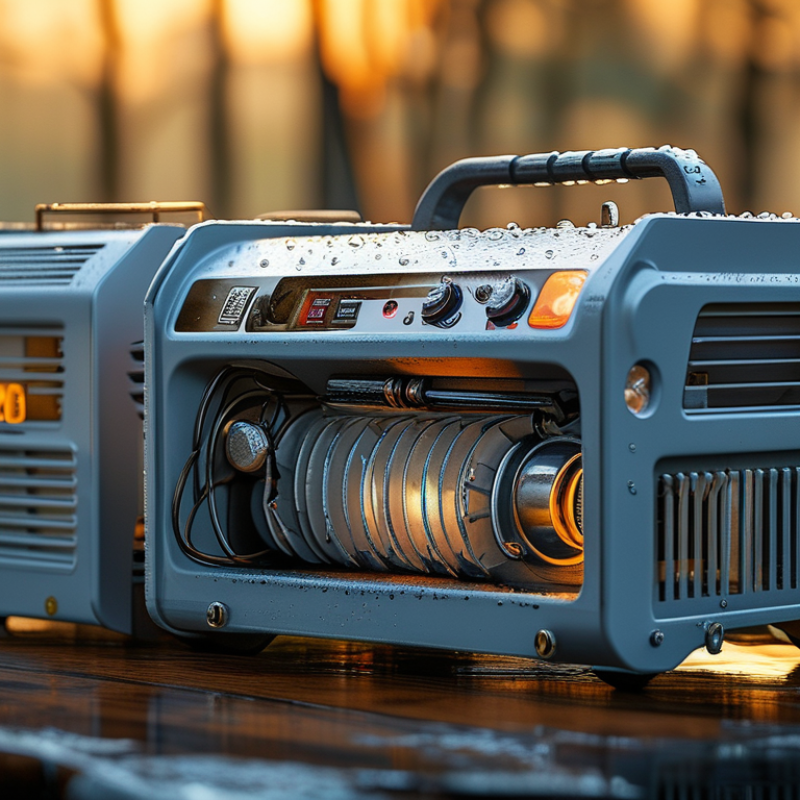
China’s camper generator manufacturing landscape has grown around practical mobile power needs. Manufacturers serve compact caravans, expedition vehicles, and temporary outdoor cabins. Their product development often begins with engine efficiency, vibration control, and simple maintenance access. A well-designed unit should fit beneath a storage bench without blocking ventilation. That detail matters.
Many factories operate across several production layers. Some build engines and alternators in-house, while others source certified components from specialized suppliers. Assembly lines commonly include winding checks, fuel-system inspections, load testing, and noise measurements. Technicians may run each generator under changing loads before shipment. The process is measurable, but not flawless. Small wiring errors can still appear when production pressure increases.
Export-oriented manufacturers increasingly focus on inverter technology, remote monitoring, and low-temperature starting. These features support campers using refrigerators, chargers, medical equipment, or heating systems. However, electronic controls require stronger quality management than basic portable units. Dust protection, moisture resistance, and stable output deserve repeated field testing. Laboratory results do not always match a wet campsite.
Experienced buyers often inspect documentation, replacement-part availability, and factory traceability. They should request test records rather than rely on attractive specifications. Production audits can reveal weaknesses in soldering, fuel sealing, packaging, or final inspection. Independent verification adds confidence, especially for long-distance distribution. The market remains competitive, yet reliability still depends on disciplined manufacturing habits.
Non-branded comparison of the principal Chinese manufacturing profiles serving camper, RV and outdoor-power applications.
| Rank | Manufacturer Profile | Common Production Base | Typical Rated Output | Common Fuel Options | Core Technology | Typical Camper Use | Common Export Compliance Scope | OEM / ODM Capability |
|---|---|---|---|---|---|---|---|---|
| 01 | Portable Inverter Generator OEM | Jiangsu and Zhejiang | 1.8–4.0 kW | Gasoline Dual-fuel | Pure-sine inverter output, electronic speed control and compact air-cooled engines. | Small campers, rooftop equipment, battery charging and sensitive electronic devices. | Depending on destination: CE, EMC, noise documentation, EU emissions requirements or US EPA requirements. | Private labeling, color changes, packaging, control-panel customization and accessory matching. |
| 02 | Quiet RV Generator Specialist | Zhejiang and Guangdong | 2.5–5.5 kW | Gasoline LPG | Sound-insulated enclosure, low-speed operation, overload protection and electric starting. | Air-conditioning support, refrigeration, lighting and general campsite power. | Export programs generally require electrical safety, electromagnetic compatibility, emissions and acoustic testing appropriate to the market. | RV control interfaces, remote-start options, enclosure design and installation-kit adaptation. |
| 03 | Dual-Fuel Recreational Generator Producer | Jiangsu and Shandong | 2.0–4.5 kW | Gasoline LPG | Fuel-selection systems, automatic voltage regulation or inverter modules and overload shutdown. | Campers requiring fuel flexibility where LPG cylinders are already available. | Fuel-system safety, emissions, electrical safety and transport labeling must be matched to the destination country. | Fuel-hose kits, regional plug configurations, manuals, labels and packaging customization. |
| 04 | Open-Frame Utility Generator Manufacturer | Chongqing and Shandong | 3.0–8.0 kW | Gasoline Diesel | Tubular-frame construction, conventional alternators, AVR systems and larger fuel tanks. | Large trailers, work vehicles, outdoor kitchens and high-load campsite equipment. | Noise, emissions, grounding, electrical safety and machinery documentation vary by destination market. | Frame color, wheel kits, fuel-tank configuration, control panels and output-socket layouts. |
| 05 | Diesel RV Genset Integrator | Jiangsu, Shandong and Zhejiang | 3.5–12.0 kW | Diesel | Compression-ignition engines, enclosed cooling systems, automatic transfer interfaces and remote monitoring. | Motorhomes and specialty vehicles with continuous or relatively high electrical demand. | Destination-specific diesel emissions, electrical safety, EMC, installation and acoustic documentation. | Vehicle mounting brackets, exhaust systems, control interfaces and custom enclosure dimensions. |
| 06 | LPG-Focused Camper Generator Supplier | Guangdong and Zhejiang | 1.5–4.0 kW | LPG Natural gas | Gas carburetion, pressure regulation, flame-safety components and enclosed inverter systems. | Campsites and RVs where reduced liquid-fuel storage and lower evaporative emissions are preferred. | Gas-system components, pressure requirements, emissions, electrical safety and local installation rules must be verified. | Regional gas connectors, regulator specifications, control labeling and installation documentation. |
| 07 | High-Output Inverter Generator OEM | Jiangsu and Chongqing | 4.0–7.0 kW | Gasoline Dual-fuel | Parallel-capable inverter systems, digital displays, electronic governors and advanced overload control. | Large RV air-conditioning systems, induction cooking and multiple simultaneous loads. | Testing commonly covers EMC, electrical safety, emissions, noise and market-specific generator standards. | Parallel cables, remote-control systems, display languages, sockets and software parameters. |
| 08 | Compact Travel Generator Producer | Zhejiang and Fujian | 0.8–2.5 kW | Gasoline | Lightweight inverter architecture, recoil or electric start and compact fuel systems. | Tent campers, small caravans, portable refrigeration and low-load electronics. | Portable-generator safety, EMC, emissions, labeling and noise requirements depend on the export market. | Compact housing, carrying handles, plug types, packaging and user-interface customization. |
| 09 | Integrated Vehicle Generator Manufacturer | Guangdong and Jiangsu | 2.0–6.0 kW | Gasoline Diesel | Under-floor or compartment-mounted systems with remote panels, automatic start and vehicle integration. | Motorhomes, mobile clinics, mobile offices and specialty recreational vehicles. | Vehicle integration, exhaust routing, ventilation, emissions, EMC and electrical safety must be assessed together. | Mounting systems, wiring harnesses, remote panels, exhaust components and vehicle-specific engineering. |
| 10 | Hybrid Generator-System Integrator | Guangdong, Jiangsu and Zhejiang | 1.0–5.0 kW generator output | Gasoline LPG | Generator-battery coordination, inverter charging, automatic start-stop logic and energy-management controls. | Campers using solar panels, auxiliary batteries and generators as a combined power system. | Generator, battery, charger, inverter and communications components may each require separate market-specific assessment. | Energy-management settings, battery interfaces, monitoring displays and complete system integration. |