10 Essential Tips for Choosing Emergency Power Solutions?
In an unpredictable world, having a reliable emergency power solution is essential. Whether facing natural disasters or unexpected outages, emergency power can keep critical systems running. Choosing the right option requires careful consideration and expertise.
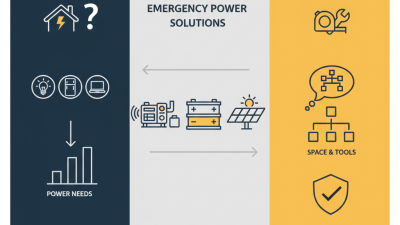
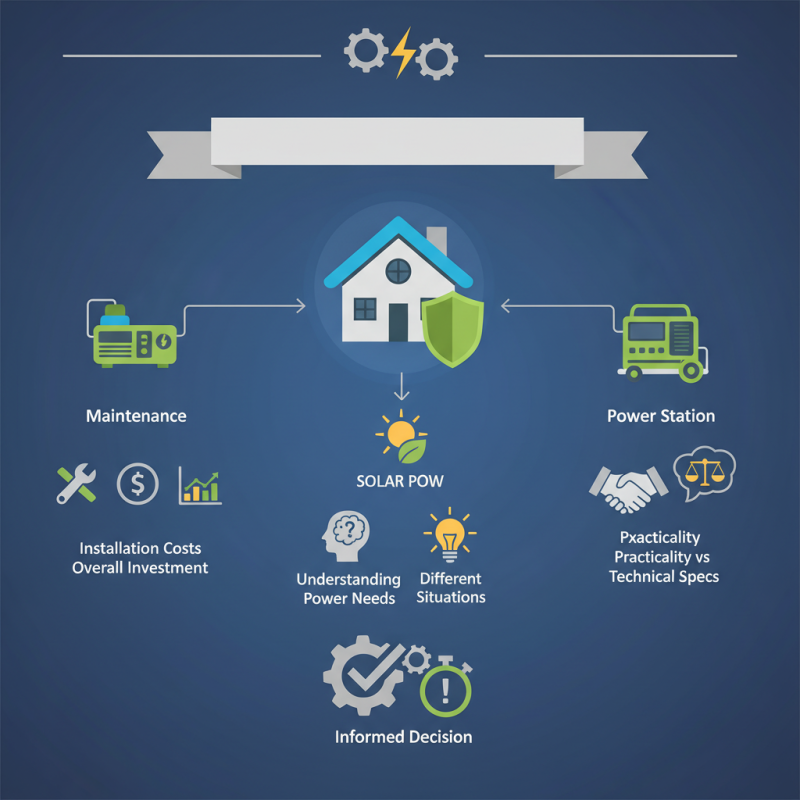
Understanding your power needs is the first step. Different situations demand different solutions. Backup generators, solar power systems, and portable units each serve distinct purposes. Assessing your specific requirements guides you toward the best choice.
It’s common to overlook maintenance and installation costs. They can significantly impact your overall investment. Some may feel overwhelmed by the options available. Seeking expert advice is a prudent approach. However, even experts emphasize the importance of personal assessments. It's vital to weigh practicality against technical specifications. An informed decision can make a world of difference when emergencies strike.
Understanding the Importance of Emergency Power Solutions
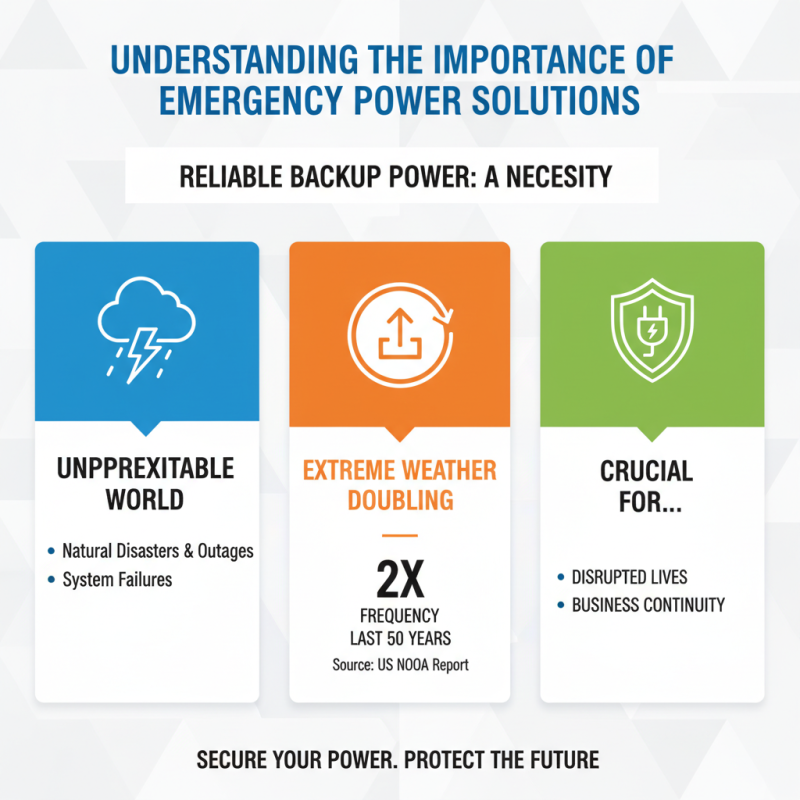
Emergency power solutions are crucial in our increasingly unpredictable world. Natural disasters, power outages, or system failures can disrupt lives and businesses. According to a report by the U.S. National Oceanic and Atmospheric Administration (NOAA), extreme weather events have doubled in frequency over the last 50 years. This data underscores the urgent need for reliable backup power.
Understanding your specific needs is key. For example, businesses must evaluate how long they can operate without power. Hospitals benefit from uninterrupted energy supply for critical equipment. The energy firm IHS Markit estimates that unplanned outages can cost businesses over $150,000 per hour. This cost highlights why investing in emergency power solutions can be a financially sound decision.
Homeowners should also assess their power requirements. A basic home emergency system can support essential appliances, while larger systems can power an entire household. However, many struggle to determine what capacity they truly need. This miscalculation can lead to inadequate support during emergencies. It’s essential to engage with professionals who can provide insights based on your unique situation.
Assessing Your Power Needs and Requirements
When it comes to emergency power solutions, assessing your power needs is crucial. According to a report by the U.S. Department of Energy, about 38 million people experience power outages each year. This statistic emphasizes the importance of proper power backup. Knowing your requirements helps avoid inadequate power during critical times.
Start by identifying what essential devices you want to keep running. Consider the total wattage these devices consume. For example, a refrigerator may need 600 watts, while medical equipment could consume over 1,500 watts. This analysis guides you in selecting a suitable power solution.
Tip: Always consider future needs. As technology evolves, your power requirements may increase. It’s also wise to examine how long you might need backup power. Some incidents last hours; others stretch for days.
Calculating the duration can help you decide between different power sources, such as generators or battery systems. Balancing short-term needs with long-term usage could minimize the chances of being unprepared. Remember, effective planning now can save you significant trouble later.
10 Essential Tips for Choosing Emergency Power Solutions
| Tip No. |
Tip Description |
Importance Level |
Recommended Power Source |
| 1 |
Assess your energy needs |
High |
Generator |
| 2 |
Consider run time |
Medium |
Inverter |
| 3 |
Evaluate installation space |
High |
Portable Generator |
| 4 |
Check noise level |
Medium |
Silent Generator |
| 5 |
Consider fuel type |
High |
Gasoline/Diesel |
| 6 |
Check safety features |
Very High |
Dual Fuel Generators |
| 7 |
Compare power output |
High |
Standby Generators |
| 8 |
Review portability options |
Medium |
Portable Equipment |
| 9 |
Consider warranty and service |
High |
Brand Options |
| 10 |
Research pricing |
Medium |
Budget Selection |
Types of Emergency Power Solutions: Pros and Cons
When looking at emergency power solutions, it’s vital to consider the type that best fits your needs.
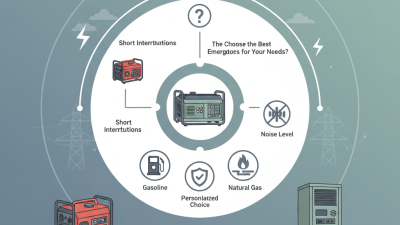
Portable generators are popular for their versatility. They can be used anywhere, but they require gasoline or diesel, which can be a hassle. Their fuel consumption also means ongoing costs. Furthermore, they can be quite noisy, which may not be ideal in residential areas.
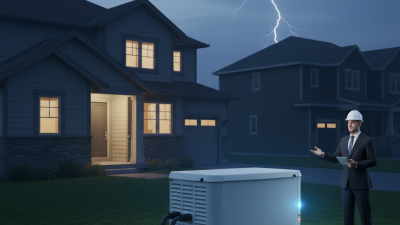
On the other hand, standby generators offer automatic power restoration. These systems connect directly to your home’s electrical system. They run on natural gas or propane, eliminating the need to refuel. However, their installation can be expensive and may require professional help. Additionally, their performance can depend on local availability of fuel during emergencies.
Solar power systems present another option. They harness energy from the sun, making them sustainable. However, they are limited by weather conditions. Nighttime or cloudy days can present challenges for reliability. In contrast, battery backup systems provide immediate power but can be costly. They need sufficient charging time and may require regular maintenance. Balancing reliability, cost, and efficiency is crucial when choosing an emergency power solution.
Evaluating Reliability and Maintenance of Power Systems
When selecting emergency power systems, reliability and maintenance are critical factors. A dependable power source can save lives and protect property during outages. Start by assessing the system’s performance history. Look for user testimonials and expert reviews to gauge how well a system functions during emergencies.
Regular maintenance is essential to ensure the optimal performance of power systems. Many users overlook this aspect and assume that once installed, everything will work seamlessly.
Routine checks should include testing the battery life and inspecting connections. Neglecting these tasks can lead to unexpected failures when power is needed most.
Consider the technical support offered by manufacturers. Fast response times and knowledgeable staff can make a difference during a crisis. Establishing a
maintenance schedule can seem tedious but is necessary for long-term reliability. Remember that even the best systems need human oversight.
Budget Considerations for Emergency Power Options
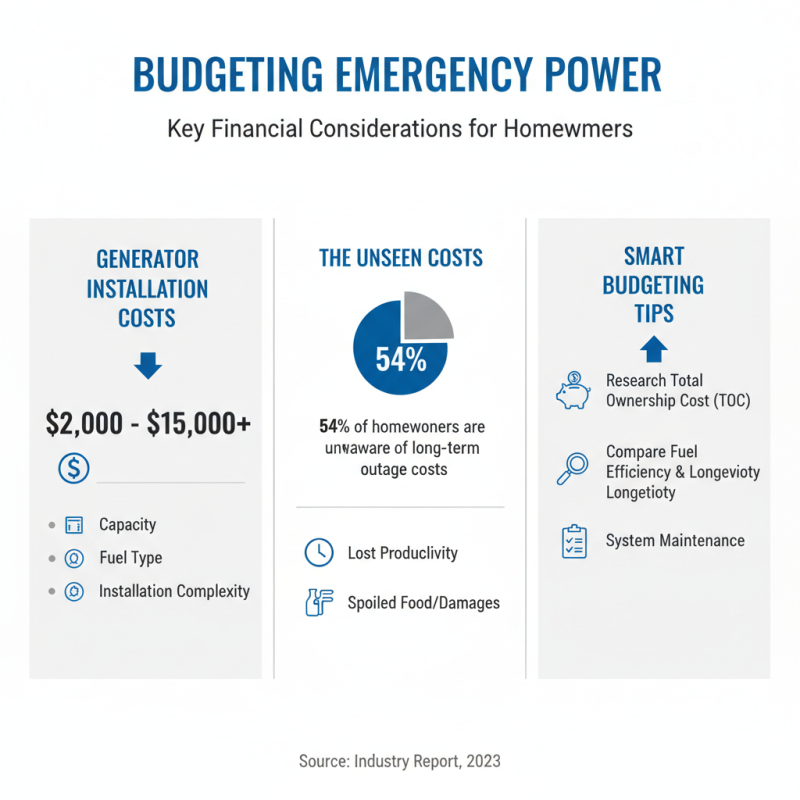
When considering emergency power options, budget is a pivotal aspect. The average installation cost for generators ranges from $2,000 to $15,000. These prices vary significantly based on capacity, fuel type, and installation complexity. According to a recent industry report, 54% of homeowners are unaware of long-term costs associated with electricity outages, including emergency power systems.
Understanding operational costs is equally crucial. Maintenance, fuel, and repair can contribute significantly to your budget. A study from the International Energy Agency indicates that homeowners may spend an average of $300 annually on maintenance for generator systems. Neglecting these factors can lead to unexpected expenses.
Finally, consider potential savings during power outages. Many businesses lose thousands of dollars for every hour of downtime. Investing in a reliable emergency power solution may be costly upfront but provides significant peace of mind. Balancing initial expenditure against long-term savings requires careful consideration.