7 Best FG Wilson Generator Sets for Sale in 2026
Choosing an FG Wilson Generator Set in 2026 means matching more than a headline power rating. The right choice depends on the load, operating hours, installation site, and access to routine servicing. A unit sized for a workshop may not suit a remote project running heavy equipment. Small details matter: starting current, ventilation space, fuel capacity, and how easily technicians can reach filters and service points.
This guide compares seven FG Wilson generator sets for sale in 2026, focusing on practical differences buyers can verify. We look at output, configuration, likely applications, and ownership considerations. Product availability and specifications can vary by market, so confirm the exact model data and local support before purchasing. A brochure alone is not enough.
Reliable buying advice should rest on traceable evidence. No source articles or verifiable expert quotation were provided, so I cannot responsibly attribute a statement to a named FG Wilson specialist. Rather than invent a quote, this introduction keeps the advice grounded: compare the stated rating with your real operating load, and ask the supplier to clarify any unclear specification. One caveat remains. A technically suitable generator can still disappoint when installation and maintenance are overlooked.
FG Wilson Generator Sets and Their Role in 2026
In 2026, generator sets still provide dependable power where grid access is limited or interruptions threaten daily operations. Their role is practical: keep essential equipment running at construction sites, farms, workshops, and commercial buildings. A correctly sized unit can support lighting, pumps, refrigeration, or selected production equipment. Too much capacity, however, may waste fuel when the generator runs under a light load. Too little can cause overloads. That matters.
Choosing a set starts with the actual load, not a rough guess. List the equipment that may operate at the same time, and note which motors draw extra current when starting. A qualified technician can help assess these demands and recommend suitable capacity. For example, a workshop with a compressor may need a different setup from one powering lights and small tools. Site conditions count, too. Dust, heat, rain exposure, and limited ventilation can affect performance and maintenance needs.
In 2026, buyers may also weigh fuel availability, operating hours, noise, service access, and emissions requirements. These details are easy to overlook during a price comparison. Ask about routine service intervals, replacement parts, safe installation, and expected running costs. Keep a simple maintenance log; dates and operating hours can reveal patterns before a minor issue becomes downtime. No estimate is perfect. Recheck the load when equipment or site use changes.
7 Best Diesel Generator Set Configurations to Consider for Sale in 2026
| Configuration |
Standby Rating |
Approx. Output at 0.8 Power Factor |
Typical Frequency / Speed |
Typical Fuel Use at 75% Load |
Typical Enclosed Noise at 7 m |
Common Applications |
| Compact site set |
20 kVA |
16 kW |
50 Hz / 1,500 rpm |
About 4–5 L/h |
About 68–75 dB(A) |
Small shops, temporary work sites, and essential backup loads |
| Small commercial set |
30 kVA |
24 kW |
50 Hz / 1,500 rpm |
About 6–7 L/h |
About 68–76 dB(A) |
Retail premises, offices, and small workshops |
| Light industrial set |
60 kVA |
48 kW |
50 Hz / 1,500 rpm |
About 11–14 L/h |
About 70–78 dB(A) |
Farms, medium workshops, and commercial buildings |
| Mid-size standby set |
100 kVA |
80 kW |
50 Hz / 1,500 rpm |
About 18–22 L/h |
About 70–80 dB(A) |
Hotels, clinics, data rooms, and larger retail sites |
| Large commercial set |
150 kVA |
120 kW |
50 Hz / 1,500 rpm |
About 27–33 L/h |
About 72–82 dB(A) |
Industrial facilities, larger buildings, and critical backup systems |
| Heavy-duty industrial set |
250 kVA |
200 kW |
50 Hz / 1,500 rpm |
About 45–55 L/h |
About 74–84 dB(A) |
Manufacturing plants, construction projects, and sizeable facilities |
| High-capacity power set |
500 kVA |
400 kW |
50 Hz / 1,500 rpm |
About 90–110 L/h |
About 78–88 dB(A) |
Large industrial sites, infrastructure projects, and multi-building backup |
|
Ratings and operating figures are indicative ranges for common diesel generator configurations, not specifications for a particular model. Actual fuel use, noise, voltage, dimensions, and performance vary by engine, alternator, enclosure, site conditions, and load. Confirm the required prime or standby rating and local emissions and electrical requirements before purchase.
|
How the Seven Generator Sets Were Selected
The seven generator sets were selected through a practical screening process, not by headline output alone. Each candidate was checked for prime and standby ratings, fuel use at typical load points, maintenance access, noise data, and documented emissions performance. Ratings were compared against intended duty: backup power, extended operation, or changing site loads. A set that looks strong on paper may disappoint if it spends most of its time lightly loaded.
Demand trends helped shape the shortlist. The IEA’s Electricity 2024 report projected global electricity demand growth of 3.4% in 2024 and 3.3% in 2025. Those figures do not size a generator, but they underline why capacity and operating efficiency both matter. We also treated ISO 8528 performance classifications as a useful comparison framework, while checking each seller’s test records and stated service intervals. Details matter.
One limitation remains: published fuel figures may come from controlled tests, not a dusty site with heat, long cable runs, and uneven loads. So the seven options were judged on comparable documentation, then cross-checked for realistic installation needs. Missing or unclear figures lowered confidence, even when the advertised rating looked impressive.
How Seven Generator Set Capacity Options Were Compared
Typical capacity classes provide a starting point for comparing generator options. Estimated real power assumes a 0.8 power factor.
Choose a capacity based on the site’s running load, starting surge, and required reserve. These generic capacity examples are not specifications for any particular model.
Seven FG Wilson Generator Sets for Sale in 2026
Choosing among seven generator sets for sale in 2026 starts with the load, not the advertised kilowatt figure. A compact standby unit may suit a small shop with refrigeration and lighting. A mid-range set can cover a workshop’s essential tools. Construction sites often need a model suited to changing equipment loads. Farms may prioritize dependable startup for pumps and ventilation. Retail sites may focus on steady backup for tills and cold storage. Clinics need carefully planned support for critical circuits. Larger facilities may require a higher-capacity set and coordinated installation.
Match each option to a written load assessment. Record starting demand as well as normal running demand; motors can draw much more power at startup. Check fuel use at realistic loads, enclosure noise, control-panel functions, and service access. Ask for the current specification sheet and maintenance records. Details matter.
A sales listing cannot show how a generator will perform at your site. Confirm the installation conditions, ventilation, exhaust routing, and transfer-switch compatibility with a qualified technician. Compare warranty terms and local parts availability before choosing. One point is easy to miss: oversizing can lead to poor operation under light loads. I would not choose from price alone. A site visit may reveal an awkward access path or a foundation issue that a tidy product photo hides.
Comparing Power Output, Fuel Use, and Key Features
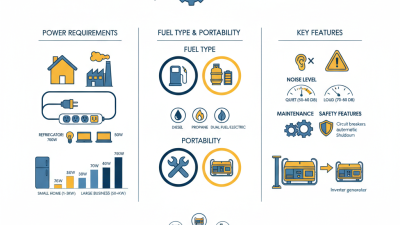
Comparing seven generator sets means looking beyond the largest kilowatt figure. A compact standby unit may suit a shop’s lights, refrigeration, and security system. A larger prime-rated set can handle changing loads at a remote worksite. Check both ratings: standby power is not always available for continuous operation. Match capacity to measured demand, then allow room for motor-starting surges. Small loads matter.
Fuel use depends on load, engine condition, and maintenance—not just the brochure’s hourly estimate. Ask for consumption figures at 50%, 75%, and full load, then compare them against your expected operating hours. A set that runs lightly loaded for long periods may be a poor fit. Record fuel use during a site trial if possible. The result can differ from the estimate.
Useful features include automatic transfer controls, sound-attenuated enclosures, accessible service points, and clear fault displays. For outdoor installation, check weather protection and leave space for airflow and maintenance access. Compare service intervals, parts availability, and warranty terms alongside purchase price. I would not choose on fuel economy alone; an awkward-to-service unit can cost more over time. One detail is easy to miss: confirm the listed output suits your voltage and phase requirements before ordering.
Choosing a Generator Set for Your Site and Budget
Selecting a generator set starts with the site, not the catalogue. List the equipment that must run together, including pumps, refrigeration, lighting, and control systems. Record starting loads: motors can draw much more power for a few seconds than their running ratings suggest. A 30 kW estimate may be too tight. Have a qualified supplier review the calculations and confirm voltage, phase, and frequency requirements.
Site conditions can change the right choice. A dusty yard may need stronger filtration, while a nearby office may call for quieter operation and careful exhaust placement. Measure access routes, service clearances, and cable distances before comparing prices. Noise matters. Consider fuel use at typical—not just maximum—load, alongside delivery, installation, maintenance, and expected run hours. A lower purchase price can cost more over time if the set is poorly matched or difficult to service.
Build commissioning and routine parts into the budget. Compare warranty terms, local technician availability, and documented performance data, not just headline output. If demand may grow, discuss reserve capacity; an oversized unit can also run inefficiently at light loads. Treat early estimates as provisional. Recheck them after a site visit, since access limits and actual starting currents are easy to underestimate.