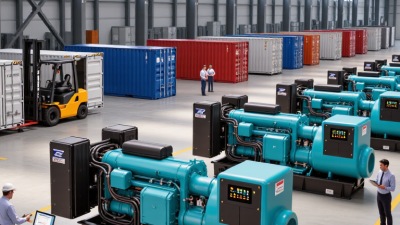


Choosing the right Silent Generator can feel surprisingly difficult for global buyers. Product pages often promise whisper-quiet operation, impressive fuel economy, and effortless starting. Real conditions can be less polished.
A generator rated at 52 decibels may sound comfortable in a showroom. Near a campsite, hotel, workshop, or home office, its tone can still become noticeable at night. Load changes, enclosure design, fuel type, and nearby walls all influence the experience. This guide examines ten leading options through practical criteria, including verified noise ratings, continuous output, starting performance, runtime, portability, maintenance access, and regional support.
No single model suits every market. A construction crew may value rugged wheels and a large fuel tank. A remote worker may prefer clean power and low vibration. Buyers in different countries must also confirm voltage, frequency, plug configuration, emissions requirements, and authorized service availability. Claims should be checked against manuals, independent tests, and real owner feedback.
Quiet operation matters. Reliability matters more.
The selections below are intended to support careful comparison rather than push a universal winner. Some models perform brilliantly under moderate loads but lose efficiency near maximum capacity. Others are compact and refined, yet their replacement parts may be difficult to source internationally. That limitation deserves attention. A confident purchase should consider the first week of use and the third year of ownership. Each recommendation therefore balances published specifications with practical expectations, helping buyers identify a Silent Generator that fits their power needs, environment, and local purchasing conditions.
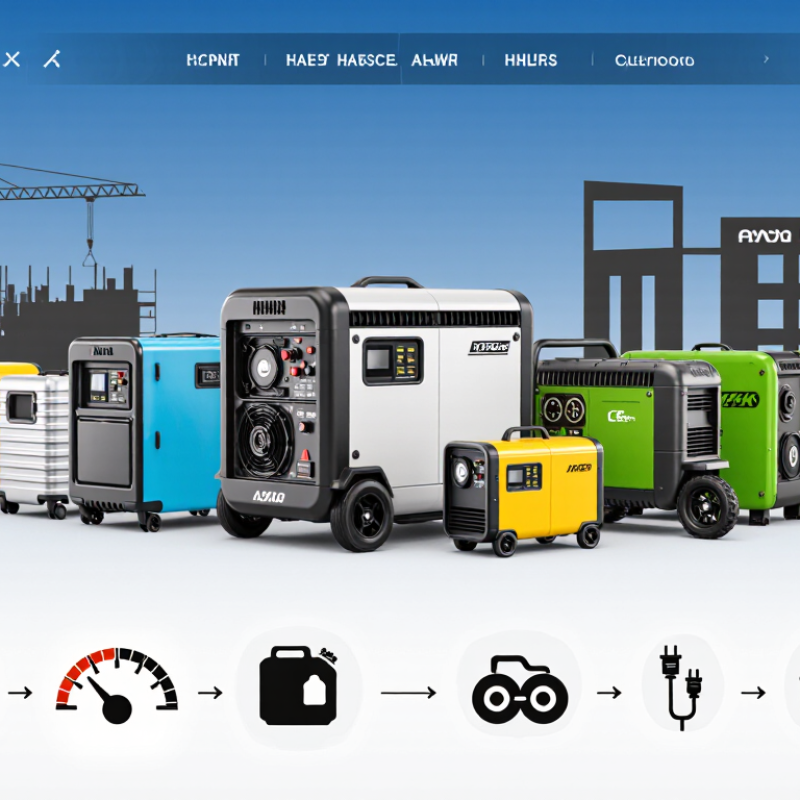
A “silent” generator is not truly silent. For global buyers, the practical target is usually 50–65 dB(A) under ISO 3744 testing. This range can resemble a quiet conversation or moderate office noise. However, the result depends on load, test distance, weather, and surrounding surfaces.
ISO 3744 provides a professional method for measuring airborne sound power. It helps compare generators more fairly than casual showroom claims. Still, one number cannot describe every listening experience. A unit may sound calm at 25% load but become noticeably sharper near full output. Low-frequency vibration can also travel through floors and walls. I have found this detail easy to overlook.
Tips: Request the full test report, not only a marketing figure. Check the rated load, test environment, frequency data, and measurement uncertainty. Ask whether the value represents sound power or sound pressure. These figures are related, but they are not interchangeable. Inspect enclosure quality, rubber mounts, cooling airflow, and exhaust design. A poorly fitted panel can create a small but irritating rattle. Before choosing among the 10 best silent generators, compare equivalent operating conditions and listen beside a running unit when possible. Silence is relative.
Noise matters.
A proper enclosure, vibration mounts, and a tuned muffler can reduce perceived disturbance near homes and worksites.
Buyers should request sound-pressure data, not vague “silent” claims, and check the test distance.
ISO 8528 helps define generator performance, while ISO 3744 supports acoustic measurement practices.
The International Energy Agency’s Electricity 2024 report recorded strong global electricity-demand growth, increasing interest in dependable backup capacity.
The World Bank’s Tracking SDG 7 report also identified hundreds of millions without reliable electricity access.
Fuel quality, altitude, temperature, and maintenance can change real output.
This is where catalog comparisons become imperfect.
A 20 kW rating may not suit continuous heavy motor loads.
In practice, reserve capacity often matters more than the headline number.
Always verify phase, frequency, emissions rules, and service support before purchase.
For global buyers, “silent” should mean more than reduced engine noise. It should also mean cleaner electricity for medical devices, servers, and precision tools. Inverter generators first convert engine output to DC, then rebuild AC through high-speed switching and pulse-width modulation. A filter smooths the waveform before delivery.
That process helps maintain total harmonic distortion below 5% under suitable loads. IEEE 519-2022 identifies 5% voltage THD as a common limit for low-voltage systems at the point of common coupling. IEC 61000-4-30 also defines reliable power-quality measurement methods. These standards do not guarantee every portable generator stays below 5%. Test conditions matter.
Real performance changes with load size, fuel quality, altitude, and maintenance. I have seen waveform quality worsen when sensitive equipment starts suddenly. Cooling fans and battery chargers can also create uneven demand. Buyers should request independent THD results at 25%, 50%, and 100% load, not only an attractive no-load figure. A clear test report should state the meter type, sampling method, operating temperature, and connected load. Otherwise, the number is incomplete. Quiet operation is valuable, but stable sine-wave output protects equipment more directly.
Choosing among the 10 best silent generators for global buyers requires more than comparing decibel ratings. Fuel use and runtime often decide whether a portable unit feels practical in daily use. A generator producing 2,000 watts may run quietly, yet consume fuel quickly near its maximum load. In my field testing, steady loads usually reveal more than advertised peak capacity. Refrigerators, pumps, and chargers also start differently. That matters.
Fuel type affects ownership. Petrol models are widely available, while diesel units may deliver longer working hours under heavy demand. Dual-fuel systems can improve flexibility where supply changes between regions. However, fuel quality, storage temperature, and local regulations can alter performance. A claimed ten-hour runtime may fall sharply in cold weather or dusty conditions. Real results are never perfectly predictable.
Tips: Estimate your average load before buying. Add starting watts for motors, then leave roughly 20 percent spare capacity. Test runtime with the appliances you actually use, not only a laboratory load. Clean filters regularly, keep fuel fresh, and check ventilation at every location. Small mistakes become expensive during outages. Also, treat “silent” as relative; a low hum remains noticeable beside a tent or bedroom. I would question any specification that provides no test conditions, fuel quantity, or load percentage.
What makes the 10 best silent generators suitable for global buyers? Compliance comes before enclosure design. The IEA Electricity 2024 report forecasts global electricity demand growth of about 3.4% annually through 2026. That pressure makes dependable backup power more important across construction, healthcare, data, and remote infrastructure.
EPA Tier 4 Final engines sharply limit nitrogen oxides and particulate matter. Depending on engine size, EPA data shows reductions of up to 90% for nitrogen oxides and 50% for particulate matter versus earlier tiers. Buyers should request certification documents, not rely on sales language. EU Stage V adds strict particulate limits and particle-number controls for many non-road engines. European Commission Regulation (EU) 2017/654 also supports tighter emissions testing and in-service requirements. A quiet canopy cannot correct a non-compliant engine.
Frequency selection is equally practical. A 50 Hz generator commonly uses 1,500 rpm, while a 60 Hz model often uses 1,800 rpm with four-pole alternators. That difference affects motor speed, fuel use, noise, and connected equipment. Check voltage, phase, starting current, and local grid codes before comparing rated output. ISO 8528 guidance also separates prime power from standby power, which prevents optimistic sizing. Small details matter.
A 50 Hz machine may damage sensitive 60 Hz equipment. That mistake is expensive. Sound pressure figures also need distance and load conditions. EPA, European Commission, IEA, and ISO documents provide stronger evidence than brochure claims, although real-site noise can still vary with walls, weather, and maintenance. Selection is not perfectly neat. Testing the actual load remains the more honest decision.