Leave Your Message

Top 10 Emergency Generators for Global Buyers

Power outages can disrupt hospitals, factories, construction sites, farms, and remote facilities within minutes. Emergency Generators provide dependable backup power when utility service fails unexpectedly. However, choosing suitable equipment requires more than comparing advertised wattage. Buyers must examine fuel efficiency, starting performance, noise levels, cooling systems, control panels, and maintenance access.

This guide reviews ten Emergency Generators for global buyers. Each option is considered through practical operating needs, including continuous load, peak demand, transfer-switch compatibility, and expected running hours. Engine quality matters. So does local service support. A generator may perform well in a showroom but struggle in a dusty jobsite or humid coastal region. Installation conditions can change everything. Available fuel, replacement parts, voltage requirements, and regional certification rules also deserve careful checking before purchase.

No ranking is perfect. Some specifications vary by configuration, altitude, temperature, and testing method. Buyers should confirm current data with manufacturers or authorized dealers. Real experience often reveals details that brochures omit, such as difficult filter access or delayed parts delivery. That is why this selection balances published specifications with practical reliability, serviceability, and user feedback. The strongest choice is not always the largest model. It is the unit that matches the site, load, climate, budget, and support network. A careful decision today can prevent expensive downtime tomorrow.

Top 10 Emergency Generators for Global Buyers

What Emergency Generators Are and How They Work

Top 10 Emergency Generators for Global Buyers
What Emergency Generators Are and How They Work

An emergency generator is a backup power system for outages, voltage failures, or unstable grids. It combines an engine, alternator, fuel system, controller, and protective equipment. When utility power fails, an automatic transfer switch detects the interruption. It then moves selected circuits to generator power, often within seconds.

The engine burns diesel, natural gas, or another permitted fuel. Its rotating shaft drives the alternator, which produces electricity through electromagnetic induction. The controller regulates voltage and frequency, while breakers protect cables and connected equipment. A realistic installation may power elevators, refrigeration units, pumps, medical devices, or a small server room. It should not automatically power every building circuit.

Demand is becoming harder to predict. The International Energy Agency’s Electricity 2024 report projected global electricity demand growth of about 4% in 2024, with strong increases continuing afterward. The World Bank’s Tracking SDG 7 report estimated that 685 million people lacked electricity access in 2022, showing why resilience remains important.

Sizing requires more than adding appliance wattages. Motors can draw several times their running current during startup. A load test, fuel calculation, ventilation review, and transfer-switch inspection are essential. In practice, buyers sometimes choose a larger unit for comfort. That can create inefficient low-load operation and higher maintenance costs. I have seen specifications look impressive while ignoring fuel storage, noise, altitude, and local servicing. Those details often decide whether backup power actually works.

How the Top 10 Generators Differ by Power, Fuel, and Design

Top 10 Emergency Generators for Global Buyers

How the Top 10 Generators Differ by Power, Fuel, and Design

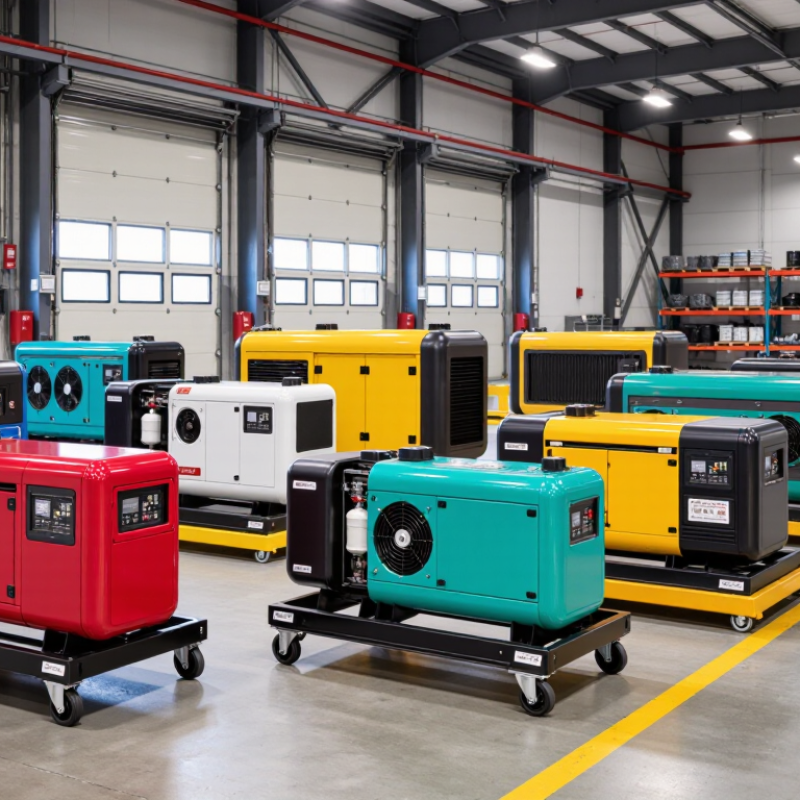
The top ten emergency generators differ sharply in output, fuel use, and physical design. Compact inverter units usually deliver 1–5 kW for clinics, shops, and home equipment. They run quietly and produce stable electricity for sensitive electronics. Portable open-frame models commonly provide 5–15 kW, but their noise and exposed components need careful placement.

Towable diesel generators often range from 20–500 kW. Their steel frames, large fuel tanks, and weather protection suit construction sites and emergency shelters. Natural-gas units can connect to fixed pipelines, reducing refueling work. However, supply interruptions may affect them during storms. Dual-fuel designs offer more flexibility, although their controls and maintenance are more complicated.

Larger standby systems may exceed 1,000 kW. They use automatic transfer switches and liquid cooling for extended operation. Prime-power models support areas without reliable grids, while standby models wait for grid failure. Hybrid systems combine batteries, solar input, and a smaller engine. This can reduce fuel consumption during light loads.

Fuel quality matters.

Technicians should check voltage, frequency, phase, and local service access before purchase. A generator rated at 100 kW may not support motors with heavy starting currents. A smaller unit can therefore fail despite matching the running load. Noise limits, altitude, humidity, and temperature also change real performance. A tidy ranking is useful, but it cannot replace a site survey.

Key Specifications Global Buyers Should Compare

When comparing the top emergency generators for global buyers, start with usable power, not advertising claims. Check both kW and kVA ratings. Standby output supports outages, while prime output supports longer operation. A unit rated for 500 kVA may deliver less power at a poor power factor. Confirm the expected load profile with an electrical engineer.

Voltage and frequency must match the installation. Common systems use different standards across regions. Ask whether the generator supports 50 Hz, 60 Hz, or both. Confirm phase configuration, automatic transfer time, and compatibility with local switchgear. Fuel efficiency matters, but runtime under real load matters more. A large tank can still disappoint if the engine runs lightly or site temperatures are high.

Look closely at derating tables. Heat, altitude, humidity, and dust can reduce output. Check noise levels, enclosure protection, emissions compliance, and emergency shutdown features. Service access is practical evidence of quality. Can technicians reach filters without removing major panels? Are spare parts available near the operating country? A neat datasheet can still mislead. I would request a witnessed load-bank test before purchase, although smaller buyers may skip it to reduce costs. That shortcut deserves careful reconsideration. Also compare warranty coverage, maintenance intervals, battery charging, cold-start performance, and documentation in the user’s working language.

International Standards, Installation, and Regional Requirements

Top 10 Emergency Generators for Global Buyers

International buyers should treat standards as operating requirements, not paperwork. ISO 8528 helps define generator performance and testing. IEC 60364 guides low-voltage electrical installations in many markets. The United States may require NFPA 110 for emergency power systems. Other regions apply different fire, noise, emissions, and fuel-storage rules. Always confirm requirements with the local authority and a licensed electrical professional. A certificate alone does not prove site suitability.

Installation conditions can change generator performance quickly. A coastal site needs corrosion protection. A cold region may require battery heating and winter-grade lubricants. Hot climates need larger ventilation capacity and careful radiator clearance. Install an approved automatic transfer switch, proper grounding, weather protection, and safe exhaust routing. Keep fuel systems separated from ignition sources. Emergency access matters. In practice, a neat specification can still fail when airflow, cable length, or local voltage is overlooked.

Tips: Request test reports, wiring diagrams, noise data, and emissions documents before purchase. Check frequency, voltage, phase configuration, and starting capacity against the actual loads. Run a supervised load test after installation. Record voltage stability, transfer time, exhaust temperature, and alarm functions. Ask whether spare filters and service parts are available locally. This step is often neglected. Recheck the plan after delivery, because transport damage and site changes can create problems.

Top 10 Emergency Generators for Global Buyers - International Standards, Installation, and Regional Requirements

A practical comparison of commonly used emergency-generator configurations. Output ranges and installation requirements are indicative; final selection must comply with local electrical, fire, building, fuel-storage, noise, and emissions regulations.

Rank Generator Configuration Typical Continuous Output Fuel and Runtime Profile Best-Fit Applications Key International Standards Installation Essentials Regional Requirements and Checks
1 Diesel Standby Generator 10–3,000 kVA per unit; larger systems can be synchronized in parallel. Diesel fuel; suitable for extended operation when an approved bulk tank is installed. Hospitals, data centers, factories, commercial buildings, utilities, and critical infrastructure. ISO 8528; IEC 60034-1; IEC 60364; NFPA 110 where adopted; local electrical and emissions codes. Engineered concrete foundation, ventilation, radiator or remote cooling, exhaust silencer, fuel containment, battery charger, grounding, and automatic transfer equipment. North America: NEC emergency-power rules and NFPA 110 may apply. European markets commonly require CE conformity, EMC compliance, Low Voltage compliance, and applicable Stage V emissions rules. Fuel storage and generator permitting vary by jurisdiction.
2 Natural-Gas Standby Generator 20–2,000 kW, depending on engine type and site conditions. Pipeline natural gas; no on-site liquid-fuel tank, but operation depends on gas-network availability and pressure. Commercial buildings, residences, hospitals, telecommunications, and sites requiring low local particulate emissions. ISO 8528; NFPA 37 and NFPA 54 where adopted; IEC 60364; local gas-installation and emissions standards. Dedicated gas line, correctly sized regulator, automatic gas shutoff, combustion-air ventilation, exhaust routing, carbon-monoxide protection, grounding, and transfer switch. Gas pressure, seismic design, methane detection, and utility-interconnection rules differ by region. A backup liquid-fuel supply may be required where gas service is not considered reliable for life-safety loads.
3 Dual-Fuel Diesel–Natural-Gas Generator 100–2,000 kW; actual output depends on the selected gas substitution ratio. Diesel pilot fuel with natural-gas substitution; provides fuel flexibility but requires two fuel systems. Industrial facilities, microgrids, remote operations, and locations with variable fuel availability. ISO 8528; IEC 60034-1; NFPA 37/NFPA 54 where applicable; local hazardous-area and emissions rules. Install certified gas train, diesel tank, ventilation, exhaust after-treatment where required, control-system interlocks, grounding, and fuel-leak detection. The governing emissions category may depend on the operating mode and jurisdiction. Gas utility approval, pressure testing, fuel storage permits, and environmental reporting may be required.
4 Portable Gasoline Generator 1–15 kW; generally intended for temporary or intermittent loads. Gasoline; compact and widely available, but storage life, fire risk, and indoor carbon-monoxide hazards require strict control. Small homes, retail outlets, workshops, field service, and short-duration emergency loads. Applicable portable-generator safety, electrical, fuel-storage, and emissions requirements; IEC or national product standards as applicable. Outdoor operation only unless specifically engineered and approved; maintain separation from doors and windows, use weather protection, provide grounding as required, and never back-feed a building. North American installations commonly require approved transfer equipment and carbon-monoxide safety provisions. Fuel containers and transport limits vary by country and local fire code.
5 Portable Inverter Generator 0.8–7 kW; some units can be operated in parallel. Usually gasoline or liquefied petroleum gas; variable-speed operation improves part-load fuel efficiency and reduces noise. Sensitive electronics, residential backup, mobile medical equipment, outdoor work, and low-noise applications. Applicable portable-generator safety, EMC, electrical, and emissions standards in the destination market. Use outdoors in a dry, ventilated location; protect from rain, maintain exhaust clearance, use approved extension or transfer equipment, and manage neutral-bonding requirements. Different countries specify plug types, voltage, frequency, EMC limits, and permissible noise levels. Confirm compatibility before import or deployment.
6 Trailer-Mounted Diesel Generator 20–2,000 kVA; selected according to transport, connection, and site-load requirements. Diesel with an integrated tank; designed for rapid deployment and temporary power. Construction, disaster response, events, rental fleets, utilities, and temporary facilities. ISO 8528; applicable road-transport, lifting, electrical, noise, and emissions requirements. Level ground, wheel chocks or stabilizers, weather protection, cable ramps, grounding electrode or site bonding, exhaust clearance, and load-rated connectors. Road width, axle load, lighting, braking, registration, transport permits, and temporary-emissions rules vary significantly between countries and states.
7 Containerized Diesel Generator 500–3,000 kVA per module; multiple modules may be synchronized. Diesel; suitable for harsh environments, remote sites, and projects needing integrated weather and security protection. Mining, oil and gas support, data centers, emergency campuses, infrastructure projects, and remote installations. ISO 8528; IEC 60034-1; IEC 60364; NFPA 110 where adopted; local structural, fire, and environmental requirements. Engineered foundation, lifting and access plan, forced ventilation, acoustic treatment, exhaust stack, fire detection, fuel bunding, cable termination, and corrosion protection. Wind, snow, seismic, salt-air, and ambient-temperature design may be mandatory. Import classification, lifting certification, site permits, and emissions approvals should be confirmed before shipment.
8 Propane or LPG Generator 5–150 kW for common standby applications; larger systems are available for engineered projects. Liquefied petroleum gas stored in pressurized tanks; long storage life, but vaporization capacity and cold-weather performance must be checked. Homes, small businesses, rural facilities, telecommunications, and sites without reliable natural-gas service. ISO 8528; NFPA 37, NFPA 54, and NFPA 58 where adopted; local pressure-vessel and gas-installation standards. Approved tank location, regulator sizing, piping protection, pressure relief, leak detection, ventilation, separation distances, grounding, and automatic transfer equipment. Tank ownership, filling access, setback distances, cylinder or bulk-storage rules, and hazardous-material transport regulations differ by country.
9 Hybrid Battery–Generator System Generator module commonly 10–500 kW with battery storage sized to the load profile. Battery supplies short-duration or transient loads; fuel generator provides extended autonomy and recharging. Telecommunications, microgrids, remote sites, construction compounds, and facilities seeking reduced generator runtime. ISO 8528; IEC 60364; applicable battery, inverter, EMC, fire, and energy-storage standards; NFPA 855 where adopted. Energy-management controls, battery thermal management, fire detection, ventilation, isolation, compatible transfer equipment, and clear operating modes are essential. Lithium-battery transport, storage, fire-protection, recycling, and grid-interconnection rules are jurisdiction-specific. Verify the required certification for the battery chemistry and enclosure.
10 Low-Emission Biodiesel-Compatible Generator 20–2,000 kVA; output depends on engine approval and fuel blend limits. Diesel engine approved for a specified biodiesel blend; fuel quality, storage stability, and cold-flow properties require attention. Organizations with renewable-fuel targets, temporary power needs, public-sector projects, and sites with sustainability requirements. ISO 8528; applicable diesel-fuel quality standards such as EN 14214 or ASTM D6751 for biodiesel components; local emissions rules. Use only manufacturer-approved blends, maintain clean and dry tanks, monitor fuel age, provide spill containment, and schedule fuel-filter inspections. Biodiesel blend limits, tax treatment, sustainability documentation, emissions certification, and fuel labeling vary by market. Confirm compatibility before filling or importing.
Buyer checklist: Confirm voltage, frequency, phase, starting-current capability, continuous and standby ratings, automatic-transfer requirements, fuel autonomy, ambient temperature, altitude derating, noise limits, emissions certification, grounding method, service access, spare-parts availability, and local authority approval before purchase.

How to Select, Purchase, and Maintain the Right Generator

Top 10 Emergency Generators for Global Buyers

Choosing an emergency generator starts with the actual load, not the advertised output. List essential equipment, starting watts, running watts, and expected operating hours. Refrigerators, pumps, medical devices, and servers may require extra starting capacity. A practical reserve of 20–30% helps prevent overloads, though larger units can waste fuel. Check voltage, frequency, phase, noise limits, fuel availability, and local electrical requirements before purchasing. A qualified electrician should confirm transfer-switch compatibility and installation safety. Global buyers should request test records, warranty terms, spare-parts access, and service support in their region. Cheap delivery can become expensive when replacement filters take weeks.

Tips

Run a realistic load test before approval. Test the generator with pumps or heaters, not only empty operation. Keep fuel clean and stored according to local rules. Record runtime, oil changes, battery checks, and fault codes. Small details matter. Avoid placing the unit in a garage, basement, or enclosed shelter. Carbon monoxide can accumulate quickly.

Maintenance determines whether emergency power works during a real outage. Inspect cables, coolant, belts, exhaust paths, and battery terminals monthly. Start the unit under load at scheduled intervals, then document voltage and frequency readings. Replace consumables according to the engine-hour schedule, even when the generator runs rarely. Weather also matters; dust, humidity, salt air, and freezing temperatures demand different protection. Buyers often focus on purchase price and overlook training. That is an easy mistake to make. Clear operating instructions, emergency contacts, and one responsible maintenance person improve reliability.