2026 How to Choose the Right Diesel Generator for Your Needs?
Selecting the right Diesel Generator is crucial for efficiency and reliability. In today's world, the demand for backup power sources has surged. According to a report by MarketsandMarkets, the global diesel generator market is projected to reach $23.3 billion by 2026. This growth shows the increasing reliance on diesel generators across various industries.
Choosing the correct generator involves understanding your energy requirements. A generator must align with your specific load needs. Oversizing can lead to unnecessary costs and inefficiencies, while undersizing can jeopardize operations. For example, a business requiring 15 kW will benefit from a model that accommodates this demand without excess capacity.
It’s important to consider fuel efficiency and maintenance requirements. Diesel generators tend to have lower fuel consumption compared to gasoline models. However, regular maintenance can often be overlooked. Skipping these checks can result in reduced lifespan and performance. Ultimately, careful evaluation of your requirements can lead to a well-informed decision on selecting the ideal Diesel Generator for your needs.
Understanding Your Power Requirements for a Diesel Generator
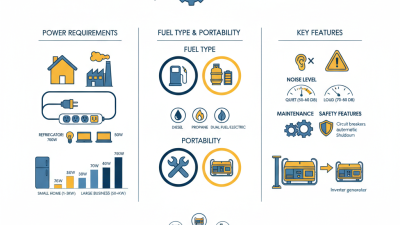
When selecting a diesel generator, understanding your power requirements is crucial. Start by assessing the total wattage needed for your appliances and equipment. Calculate the starting and running watts for each item. Appliances like refrigerators, air conditioners, and power tools require higher starting wattage. Make a comprehensive list to avoid omissions.
Consider the duration of use. Will the generator run for hours, days, or longer? If you have critical equipment, you may need a generator that runs continuously. Factor in fuel efficiency. A generator that consumes less fuel can save costs over time. Reflect on your environment, too. Noise levels and emissions are important, especially in residential areas.
Finally, think about your budget. A higher initial investment may lead to long-term savings in operational costs. However, cheaper options might result in frequent repairs. Take time to weigh the pros and cons of different models. It's essential to remember that the cheapest option may not always be the best choice for your needs.
Types of Diesel Generators and Their Applications
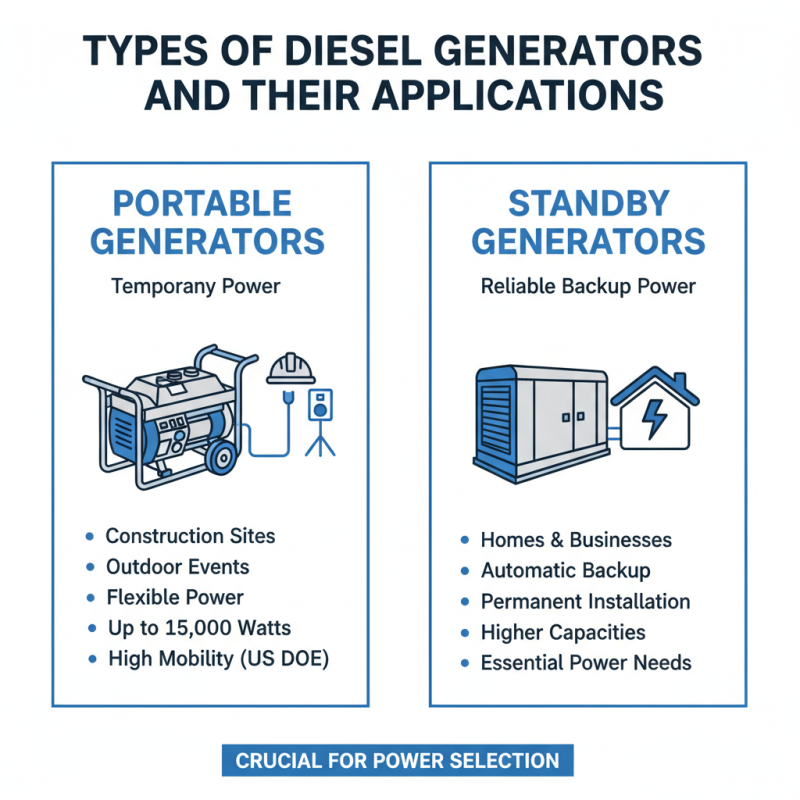
When selecting a diesel generator, understanding the types available is crucial. The two main categories are portable and standby generators. Portable generators are favored in construction sites or outdoor events. They provide flexibility and can often deliver up to 15,000 watts. According to the U.S. Department of Energy, these generators are highly mobile, making them suitable for temporary power needs.
Standby generators are permanent fixtures, typically installed outside a home or facility. They automatically activate during power outages. These units can handle loads of 5,000 to 20,000 watts. A report by the International Energy Agency highlights that standby generators are essential for critical facilities like hospitals and data centers, where uninterrupted power is vital.
In terms of application, industrial diesel generators are crucial for manufacturing and telecommunications. They can operate for long durations and support heavy machinery. Reports from the American Council for an Energy-Efficient Economy suggest that these generators account for approximately 27% of the global energy market. However, noise and emissions are concerns that need addressing. Balancing power needs with environmental responsibility is an ongoing challenge in the industry.
Key Features to Consider When Selecting a Diesel Generator
Choosing the right diesel generator involves understanding several key features.
Power output is crucial. It determines how many devices you can run simultaneously. Assess your requirements carefully. Consider both starting and running wattage. This helps avoid overloading the generator.
Fuel efficiency is another important aspect. A generator that consumes less fuel can save money over its lifespan. Look for models with larger fuel tanks, as they provide longer run times between refuels.
Noise levels matter too. Some generators produce significant noise, which may not be suitable for residential areas.
Portability is worth considering if you plan to move the generator. Lightweight models can be convenient. Yet, they might compromise on power or durability. Ensure you balance these options.
Also, check for compliance with safety standards. Generators should have emergency shutoff features. This adds an extra layer of safety. Overall, do thorough research before making a decision.
Assessing Fuel Efficiency and Operating Costs
When choosing a diesel generator, assessing fuel efficiency is crucial. A generator's fuel consumption can significantly impact operational costs. According to industry reports, a well-calibrated diesel engine can achieve efficiency levels ranging from 30% to 40%. This means approximately 60% to 70% of the fuel's energy goes to waste. Selecting models with higher efficiency ratings can save you money in the long run.
Operating costs extend beyond fuel consumption. Regular maintenance and potential repairs can add up. Industry data shows that maintenance costs can consume up to 20% of the total operating budget for generators. Therefore, consider generators designed for easy access to components, which can save time and money.
**Tip:** Regularly monitoring fuel usage helps identify inefficiencies. This analysis can lead to smarter operational decisions.
**Tip:** Investigate warranty options and service plans before purchasing. Long-term support can save costs later.
Evaluating fuel efficiency and operational costs requires careful analysis. Ensure your choice aligns with both immediate needs and long-term budget plans.
2026 How to Choose the Right Diesel Generator for Your Needs? - Assessing Fuel Efficiency and Operating Costs
| Generator Model |
Rated Power (kW) |
Fuel Efficiency (L/h) |
Operating Cost (per hour) |
Noise Level (dB) |
| Model A |
50 |
4.5 |
$10 |
75 |
| Model B |
100 |
6.0 |
$15 |
78 |
| Model C |
150 |
7.5 |
$20 |
80 |
| Model D |
200 |
9.0 |
$25 |
82 |
Maintenance and Support Considerations for Diesel Generators
When choosing a diesel generator, maintenance and support are key factors. Regular maintenance is crucial for prolonging the lifespan of the generator. Simple tasks include changing oil, checking filters, and inspecting belts. These actions ensure optimal performance and reliability. Neglecting maintenance can lead to costly repairs.
Consider the availability of support when selecting a generator. A reliable supplier will offer guidance and assistance. This includes training for operators on proper usage. Technical support should be easily accessible. Breakdowns can occur unexpectedly, so timely help is essential.
It's also worth reflecting on the long-term costs. While generators may seem affordable, maintenance expenses can add up. Have a budget for ongoing upkeep. Think of potential downtime too; it can disrupt operations. Balancing initial investment with ongoing support is critical for your needs.