How to Choose the Right Power Generator for Your Needs?
Choosing the right power generator is crucial for both home and business needs. Expert John Smith, a seasoned specialist in the power generation industry, once stated, "Selecting the right generator can mean the difference between convenience and chaos." Understanding your specific requirements is vital.
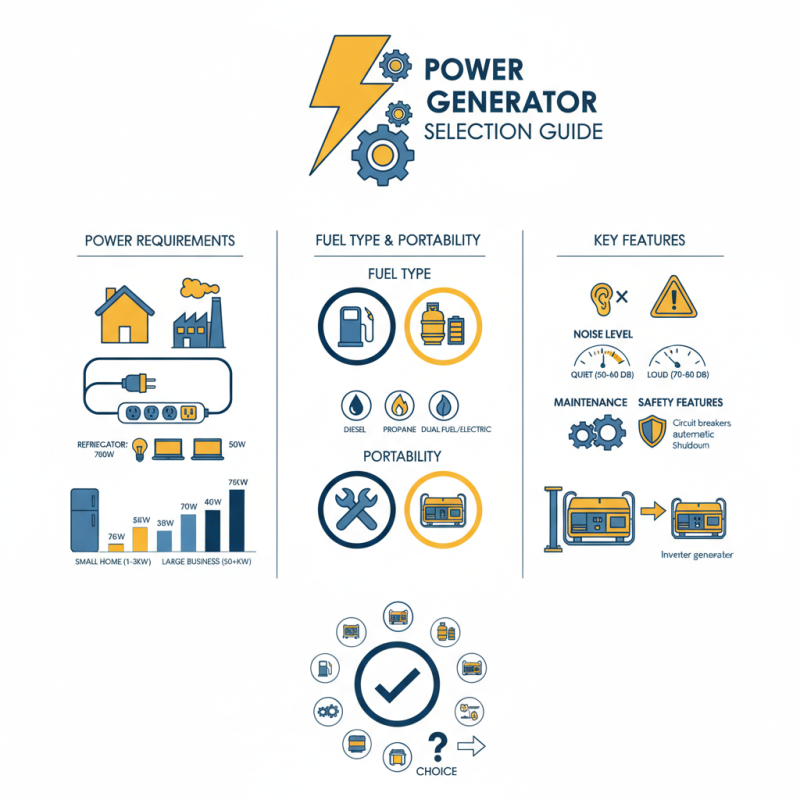
Power generators come in various sizes and types. It’s easy to feel overwhelmed. For instance, consider the wattage needed for your devices. Many make the mistake of underestimating this factor. Additionally, consider fuel types and portability. Each choice can significantly impact efficiency and usability.
Many buyers overlook essential features. Noise level, for example, might seem trivial. However, in residential areas, a quiet generator is often a necessity. Reflecting on what you truly need will lead to a more informed decision. A careful evaluation of your power requirements will guide you to the ideal power generator for your needs.
Understanding Your Power Needs and Requirements
When choosing a power generator, understanding your power needs is essential. According to a report from the U.S. Energy Information Administration, households consume an average of 877 kWh per month. Knowing your consumption patterns helps narrow down the generator size. Are you powering a few essential devices or your whole home?
Consider the wattage of each appliance. For example, a refrigerator typically requires 600-800 watts, while a microwave may need up to 1,200 watts. You might estimate total wattage and add a buffer of about 20%. This ensures the generator runs efficiently and reliably. Miscalculation can lead to an undersized unit, which may not meet demands during peak usage.
Determining fuel type is also critical. Common options include gasoline, propane, and diesel. Each has its pros and cons. Gasoline is readily available but may not store well. Propane, while cleaner, requires sufficient storage space. Diesel generators offer efficiency but often at a higher upfront cost. Think about your priorities and think carefully. Balancing convenience and efficiency is vital for a well-informed decision.
Types of Power Generators: An Overview
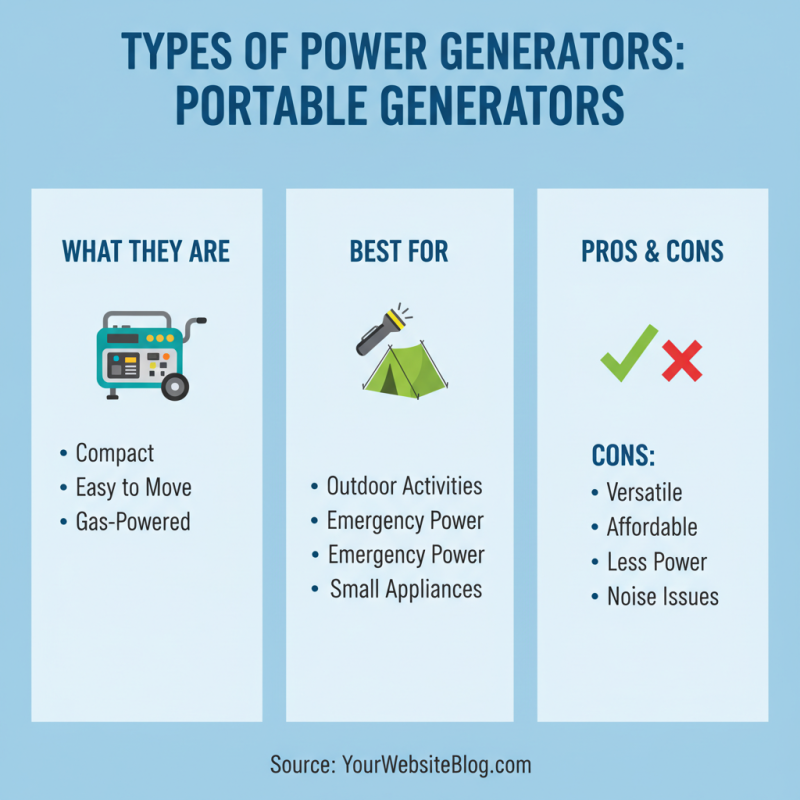
When considering power generators, it’s essential to know the types available. Portable generators are compact and easy to move. They’re ideal for outdoor activities or emergency power needs. However, they usually provide less power than larger options. You might find them useful, but they can also have noise issues. Some people overlook this factor.
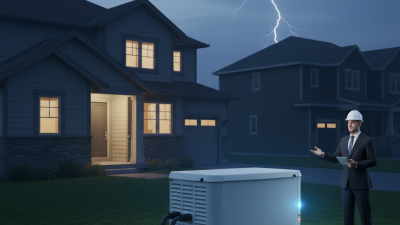
Standby generators are another option. They are permanently installed and automatically start during a power outage. This type can power an entire home but comes with a higher price tag. People often underestimate the installation costs and maintenance required. It’s crucial to factor in these ongoing expenses.
Inverter generators are gaining popularity due to their fuel efficiency and quiet operation. They produce clean power, suitable for sensitive electronics. However, they typically have a lower wattage output. This can be limiting for larger equipment. You may need to evaluate your actual power requirements before choosing one. Always consider your specific needs and usage scenarios.
Key Features to Consider When Choosing a Generator
When choosing a power generator, a few key features are essential. First, identify your power needs. Consider the total wattage required for your appliances. A generator should offer a bit more than your needs. This provides a buffer for unexpected demands.
Portability is another important aspect. Some generators are easy to transport. Others require a dedicated space. Think about how often you'll move it. Noise level also matters. Some generators operate quietly, while others can be quite loud. If you're using it in residential areas, noise can be an issue.
Fuel type is critical too. Gas, propane, and diesel are common options. Each has pros and cons. Gas is easily available, but storage can be a hassle. Diesel lasts longer but may be harder to find. Evaluate your situation carefully. Lastly, don’t neglect safety features. Look for automatic shut-off systems. Also, check for overload protection. These features can prevent accidents. Being aware of these elements will help you make an informed choice.
Assessing Fuel Types and Their Efficiency
Choosing the right power generator largely depends on the type of fuel it uses. Each fuel type has its own efficiency levels and operational costs. Common options include gasoline, diesel, propane, and natural gas.
Gasoline generators are popular for portability. However, they can be less efficient in the long run. Diesel engines are more efficient and last longer but often come with a higher initial cost.
Propane is clean-burning and easy to store. It offers longer shelf life compared to gasoline. Yet, users may find availability a challenge. Natural gas is convenient if you have a supply line. Its efficiency can vary based on local prices and availability.
Tips: Consider how often you will use the generator. If it's for occasional use, a gasoline model may suffice. However, for frequent use, think about diesel for its durability. Always assess the cost of each fuel type in your region. Efficiency isn't just about fuel consumption; think about maintenance too. A generator with higher fuel efficiency can save you in repairs over time.
Budgeting for Your Power Generator Purchase and Maintenance
Budgeting for a power generator purchase requires careful planning. According to industry reports, the average cost of residential generators ranges from $600 to $7,000, depending on size and features. Installation can add another $1,000 to $3,000 to your expenses. Assess your needs. Do you require a portable generator for occasional use? Or a standby generator for home security during outages?
Maintenance also comes with costs. Regular upkeep can range from $50 to $300 annually, depending on the generator type. Some models may need more frequent oil changes and filter replacements. Neglecting these can lead to costly repairs. Interestingly, a study from Power Generation Technology Insights revealed that preventive maintenance can extend your generator's lifespan by nearly 30%.
While budgeting, consider fuel types too. Diesel and propane may have different price points affecting overall costs. It’s wise to do thorough research before committing. Unexpected expenses often arise, and you might find yourself paying more than planned. Collect quotes and seek professional advice when needed. Balancing initial purchase costs with ongoing upkeep is essential.
How to Choose the Right Power Generator for Your Needs?
| Generator Type |
Power Output (W) |
Fuel Type |
Price Range ($) |
Maintenance Cost (Annual $) |
Ideal Use Cases |
| Portable Generator |
2000 - 4000 |
Gasoline |
300 - 800 |
50 - 100 |
Camping, Outdoor Events |
| Inverter Generator |
1000 - 3000 |
Gasoline |
500 - 2000 |
40 - 80 |
Recreational Vehicles, Sensitive Electronics |
| Standby Generator |
5000 - 20000 |
Natural Gas or Diesel |
3000 - 15000 |
150 - 300 |
Home Backup, Large Appliances |
| Diesel Generator |
5000 - 100000 |
Diesel |
2000 - 50000 |
300 - 600 |
Construction Sites, Commercial Uses |