How to Choose the Right Large Generator for Your Needs?
Choosing the right large generator can be a daunting task. Renowned industry expert, John Miller, states, “A large generator is an investment in reliability.” This highlights the importance of making informed decisions. Your specific needs will determine the type of generator you require.
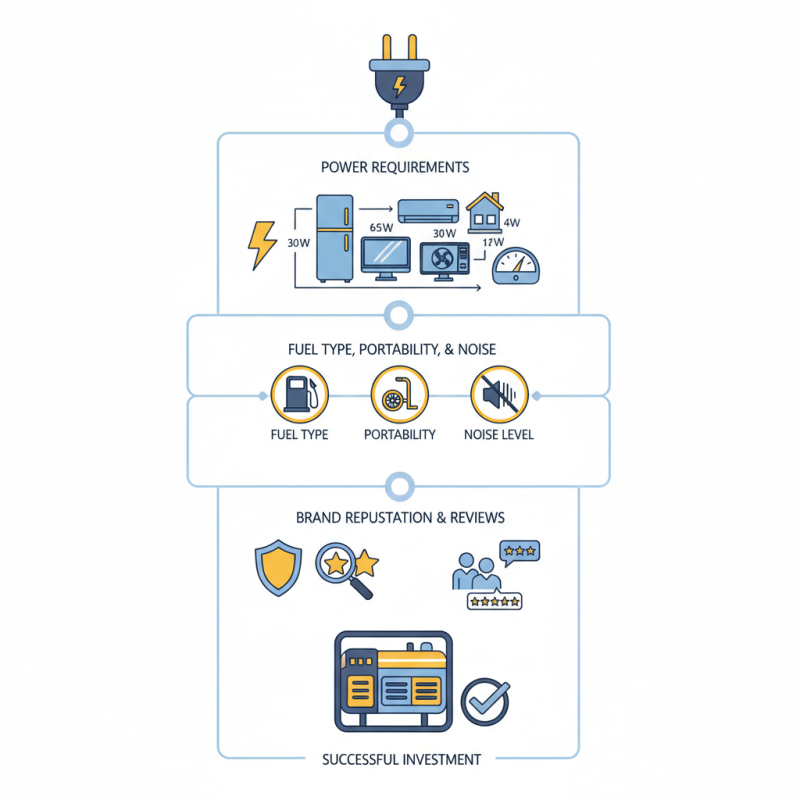
Consider your power requirements before making a choice. Assess how much wattage you will need to run essential appliances or equipment. A poorly selected large generator could lead to outages during critical times. It’s crucial to think about fuel type, portability, and noise levels as well. These factors can greatly impact your overall satisfaction.
Moreover, not all large generators are created equal. Some may promise high performance but fail in real-world applications. Researching reputable brands and reading user reviews is vital. Mistakes in selection can be costly. A generator that doesn't meet your needs becomes a burden rather than a solution. Being mindful of these details is key to ensuring your investment is worthwhile.
Understanding Your Power Requirements for a Large Generator
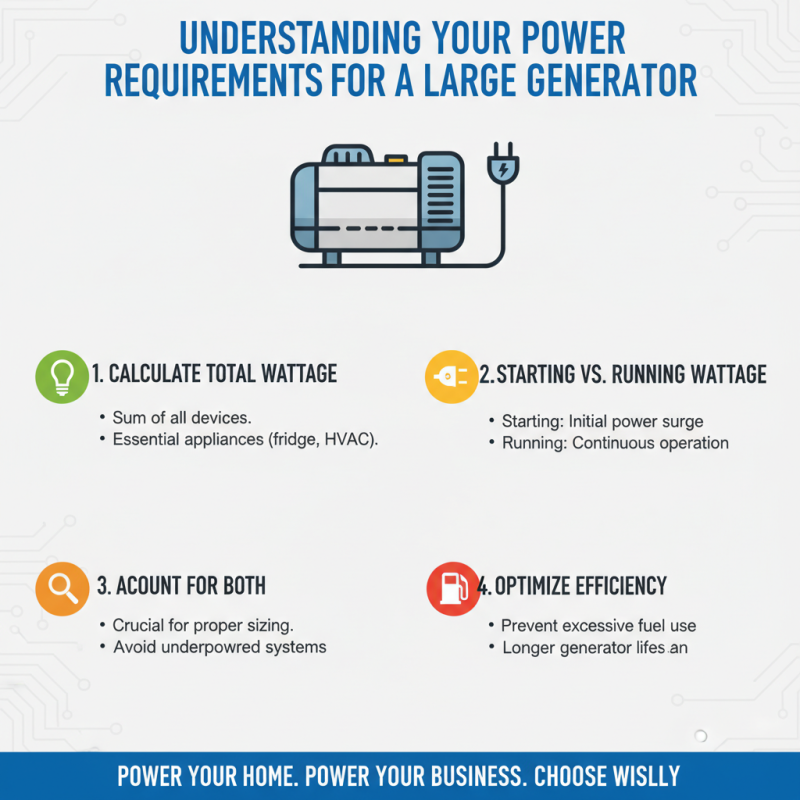
Choosing the right large generator starts with understanding your power needs. Calculate the total wattage of all devices you plan to run. Consider essential appliances like refrigerators and HVAC systems. Each appliance has a starting and running wattage. Ensure you account for both. Ignoring these details can lead to underpowered systems or excessive fuel consumption.
Next, think about how long you will need the generator to run. Will it be for a few hours or several days? This affects your fuel choice. Diesel generators often run longer than gas-powered models. However, diesel can be heavier and more difficult to transport. Also, consider noise levels, especially in residential areas.
Finally, identify your budget. Larger generators can be quite expensive. A higher price doesn't always equate to better performance. Some models might have features you don't need. Balancing power requirements with budget constraints can be tricky. It's worth reevaluating your choices multiple times. Remember that the most powerful generator isn't always the best option for your situation.
Types of Large Generators: Diesel, Gas, and Alternative Fuels
Choosing the right large generator involves understanding different fuel types. Diesel generators are popular for their efficiency. They provide a high power output, making them ideal for heavy-duty applications. However, they can be noisy and require more regular maintenance. The upfront cost is typically higher, which may be a drawback for some users.
Gas generators are usually easier to maintain. They are quieter than diesel models, making them suitable for residential areas. However, their fuel efficiency may not match that of diesel units. Alternative fuels, such as propane, offer a cleaner option. They produce fewer emissions and have less odor. But, availability can be an issue in some regions. Users often struggle to decide which fuel type best suits their needs.
Consider your specific requirements carefully. Each generator type has unique strengths and weaknesses. It’s essential to think about fuel availability, noise levels, and maintenance costs. A decision made without thorough research may lead to frustration later. Reflecting on your needs now can prevent regret down the line.
Comparison of Fuel Types for Large Generators
Key Features to Consider When Selecting a Large Generator
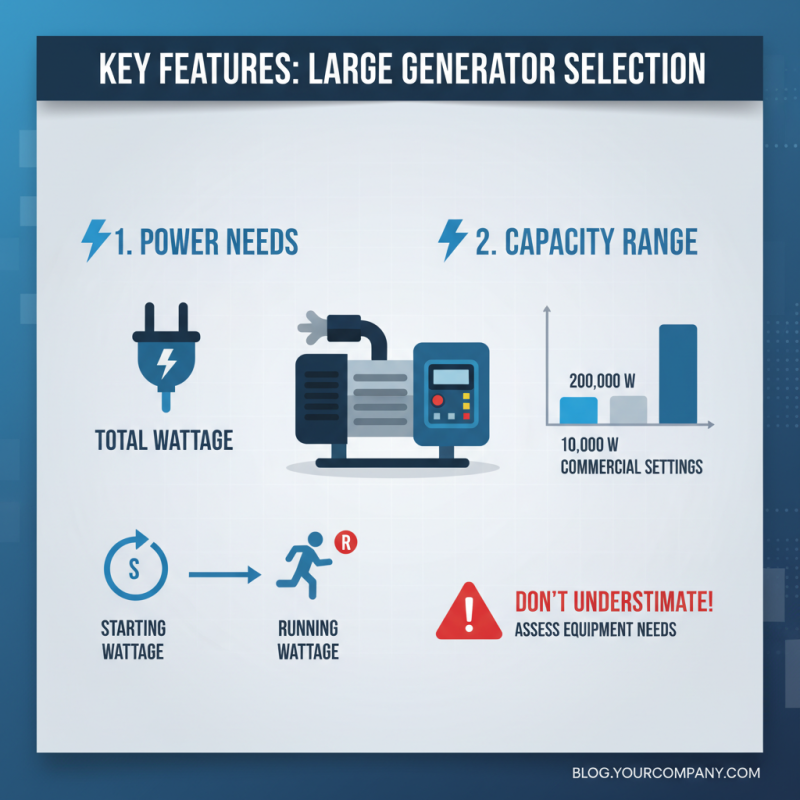
When selecting a large generator, consider your power needs carefully. A generator's wattage indicates its capacity. For instance, in commercial settings, generators often range from 10,000 to 200,000 watts based on industry surveys. Ensure you assess both starting and running wattage to avoid underestimating the power required for equipment.
Fuel type is another crucial aspect. Diesel generators are often favored for their efficiency and longevity. According to a market report, about 40% of large generator users prefer diesel over other fuel types. However, consider the fuel availability in your area. Gasoline options may be more accessible but come with shorter run times.
Lastly, noise levels can be a concern. Professional studies indicate that many users report noise pollution as a significant drawback of larger generators. It’s essential to choose models with quieter operations for residential use. Check decibel ratings before making a decision. The right generator meets power demands and aligns with your noise and fuel preferences. Take your time. Reflect on these details carefully.
Evaluating the Portability and Accessibility of Your Generator
When selecting a large generator, portability and accessibility are crucial factors. A generator that is easy to transport can be a game-changer in emergencies. Lightweight models with wheels can offer significant mobility. A handle or a sturdy grip is also essential for lifting and moving your generator without strain. However, many people overlook the balance between portability and power output. A more powerful generator can be heavier and harder to move.
Accessibility is just as important. Make sure you choose a generator with easy-to-read controls and accessible fuel ports. If you find yourself in a power outage, fumbling with complicated buttons can be frustrating. Additionally, consider the noise level. An overly loud generator may keep you from accessing it whenever you need. Placement is key. Ensure that there's enough space around the generator for safe operation. Yet some locations can be too far for easy access. Reflecting on these elements can save you hassle in high-pressure situations.
How to Choose the Right Large Generator for Your Needs? - Evaluating the Portability and Accessibility of Your Generator
| Generator Model |
Power Output (Watts) |
Fuel Type |
Portability (Weight in lbs) |
Accessibility Features |
| Model A |
8000 |
Gasoline |
150 |
Wheels, Handle |
| Model B |
10000 |
Diesel |
250 |
Electric Start, Remote Control |
| Model C |
5000 |
Propane |
100 |
Compact Size, Carrying Handles |
| Model D |
12000 |
Gasoline |
180 |
Wheels, Foldable Handles |
| Model E |
9000 |
Dual Fuel |
160 |
USB Ports, Quiet Operation |
Budgeting for Purchase and Maintenance of a Large Generator
Purchasing a large generator is a significant investment. Budgeting plays a crucial role in this process. According to industry reports, the average cost of a large generator ranges from $5,000 to $50,000. This depends on the generator’s capacity and features. It’s vital to assess your power needs accurately. Overestimating can lead to unnecessary expenses.
Maintenance costs should also be factored in. Regular servicing can prevent major issues down the line. The National Association of State Fire Marshals suggests budgeting about 2-5% of the generator's purchase price annually for maintenance. This ongoing financial commitment can be challenging. Many buyers overlook this vital aspect, leading to unexpected repair bills.
Consider fuel costs as well. Generators run on various fuels, including diesel, natural gas, and propane. Each type has different price points. An average generator may consume about 0.5 to 1.5 gallons of fuel per hour, depending on the load. This means fuel expenses can fluctuate widely. It’s essential to track and budget these ongoing costs realistically. Ignoring them can result in financial strain, disrupting your power supply plans.