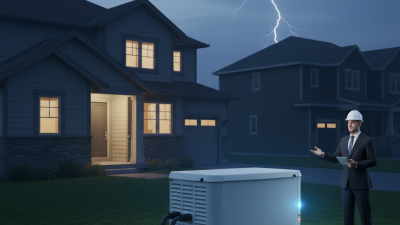


In recent years, the demand for Silent Generators has surged. According to a report by Global Market Insights, the silent generator market is expected to reach $2.4 billion by 2027. This growth highlights the need for understanding how to choose the right generator for various applications.
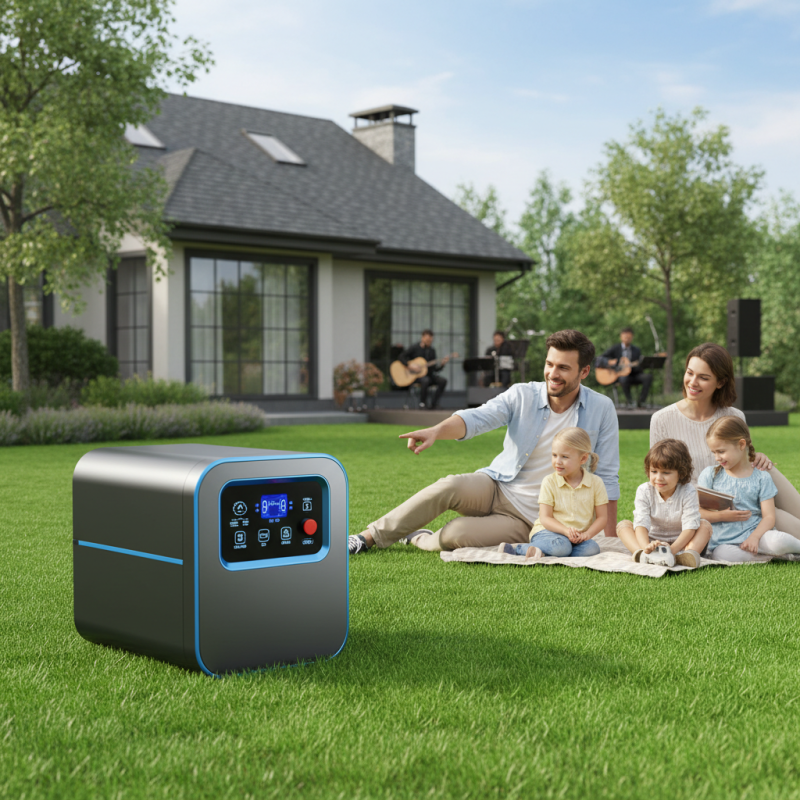
John Smith, a leading expert in power solutions, states, “Choosing the right Silent Generator is crucial for both efficiency and noise reduction.” It's essential to consider factors like power output, fuel type, and portability. Silent Generators reduce noise pollution, making them ideal for residential use and outdoor events. However, selecting a generator isn't always straightforward.
Many consumers struggle with balancing power needs and budget constraints. Investing in a high-quality Silent Generator can lead to long-term reliability. Yet, buyers often overlook maintenance costs and warranties. Understanding these factors ensures a well-informed decision. The right choice can enhance your experience while minimizing disruptions.
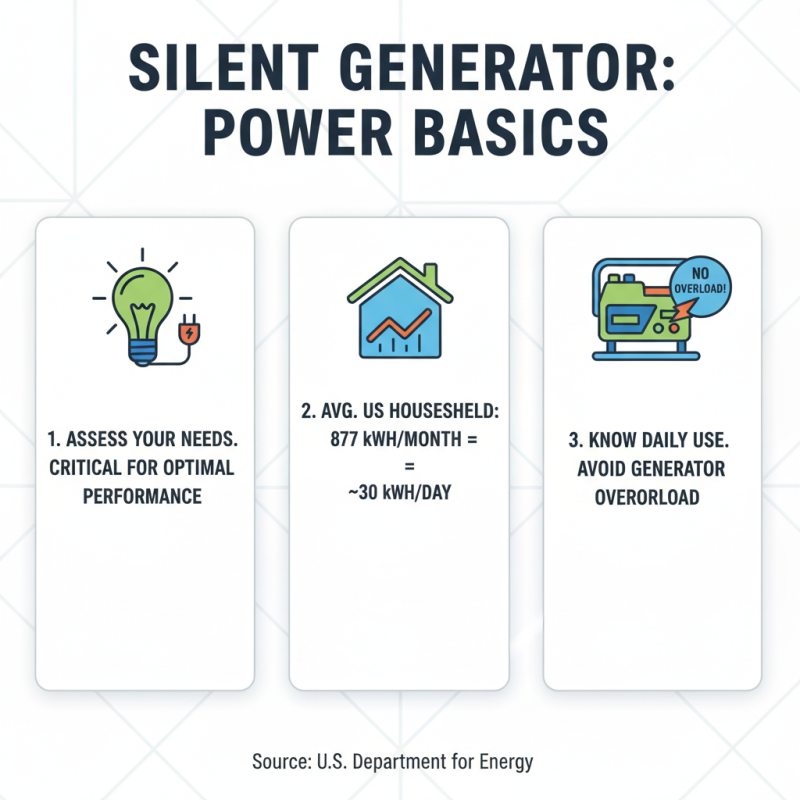
Choosing the right silent generator starts with understanding your power requirements. Assessing your power needs is critical for optimal performance. According to the Department of Energy, the average household consumes about 877 kWh per month. This translates to a daily requirement of approximately 30 kWh. Knowing your daily consumption helps avoid generator overload.
You need to consider the wattage of the appliances you intend to run. For instance, a refrigerator may require 600 watts, while a microwave could demand around 1000 watts. Adding these figures reveals the total power needed. It's essential to factor in starting wattage, as some devices pull more power when they first turn on. Research indicates that up to 30% of the total wattage could be needed for start-up spikes.
Evaluating your specific needs allows for better performance and efficiency. Be careful, though; oversizing can lead to wasted fuel and increased noise levels. Industry standards recommend a 20% buffer over your calculated requirement. This can prevent operational stress. The balance between sufficient power and efficiency is delicate and needs thoughtful reflection. Matching your generator to these requirements is key to a reliable and silent power solution.
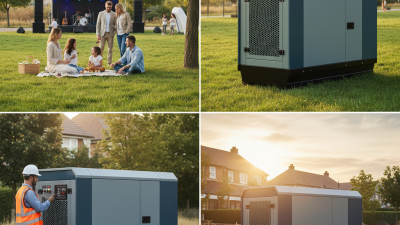
When choosing a silent generator, noise levels are a primary concern. A quieter generator can enhance comfort in residential areas or during camping trips. Look for sound ratings measured in decibels (dB). Generally, a model below 60 dB is considered quiet. This level is akin to soft conversation or background music.
Consider your environment when evaluating noise. If you have close neighbors, a quieter generator can prevent disturbances. Many models come equipped with noise-reduction features, such as soundproofing and inverter technology, which can make a significant difference. A generator that sounds great on paper may still be louder under load.
Tips: Always check user reviews. Real users provide insights on actual performance. If possible, listen to a generator in action before making a purchase. This is especially helpful to gauge if the noise level aligns with your expectations.
Installation location matters too. Placing the generator on soft surfaces can help absorb sound. Surrounding the area with barriers, like wooden walls or shrubs, might further reduce noise dispersion. A little planning can go a long way in noise management.
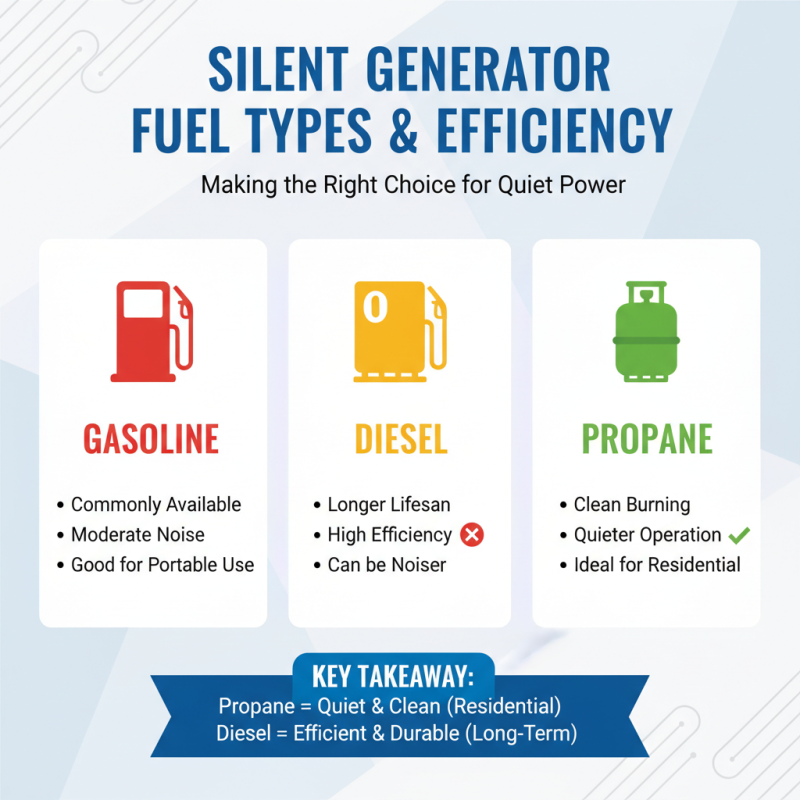
When selecting a silent generator, fuel type and efficiency are crucial. Gasoline, diesel, and propane are common fuels, each with unique benefits. Diesel is often favored for its longevity. However, it can be noisy compared to gasoline. Propane burns cleanly and is quieter, making it an excellent choice for residential use.
Tip: Consider your primary use. For home backup, propane may be more convenient and efficient. For heavy-duty applications, diesel engines can provide more power. Regularly maintaining the generator also increases fuel efficiency.
Efficiency matters, too. Look for models with high fuel efficiency ratings. They will consume less fuel over time, saving you money. Also, assess how long a generator can run on a full tank.
Tip: Keep a log of usage. This will help track fuel needs and efficiency. If your generator runs inefficiently, it might be time for a check-up. Remember, an efficient generator reduces running costs while being environmentally conscious. The right choice can depend on your priorities, so reflect on your personal needs before deciding.
When selecting a silent generator, size and portability are crucial factors. Compact models typically weigh between 40 to 100 pounds. If you're frequently on the move, lighter generators are preferable. For fixed locations, larger units offer greater power output.
Storage options also play an important role. Many silent generators feature built-in fuel tanks that reduce the hassle of refueling. Some models come with durable enclosures, protecting them from weather and wear. According to a report by industry analysts, approximately 70% of generator users prioritize ease of storage when choosing a model.
Tip: Always assess your available storage space. Don't overlook the generator's dimensions.
Consider how often you plan to use your generator. More frequent usage increases the importance of portability and efficient storage. For occasional users, larger models may provide more power when needed. However, the weight and size might be a concern for transportation. Reflect on your specific needs to find a balance.
Tip: Read user reviews for insights on practical experiences. This can reveal potential shortcomings and help refine your choice.
When choosing a silent generator, cost is a crucial factor. Evaluate your budget carefully. Silent generators can vary widely in price. Cheaper models may seem appealing, but they often compromise on quality. Investing a bit more can ensure better performance and longevity. Look into what features matter most to you. These may include noise levels, fuel efficiency, and power output. The initial purchase price is only part of the total cost.
Warranties are essential. A good warranty means confidence in the product. Many silent generators come with one to three years of coverage. This can save you money on repairs. Check the details: what is and isn’t covered? Additionally, after-sales support varies by manufacturer. Reach out to customer service before buying. Ask questions about maintenance and repair processes. Good support can make a difference. It can be frustrating if you're left in the dark after making your purchase. Look for reviews that highlight customer experiences. This helps gauge the level of support available. Remember, a silent generator is an investment. Make sure it’s backed by reliable service.